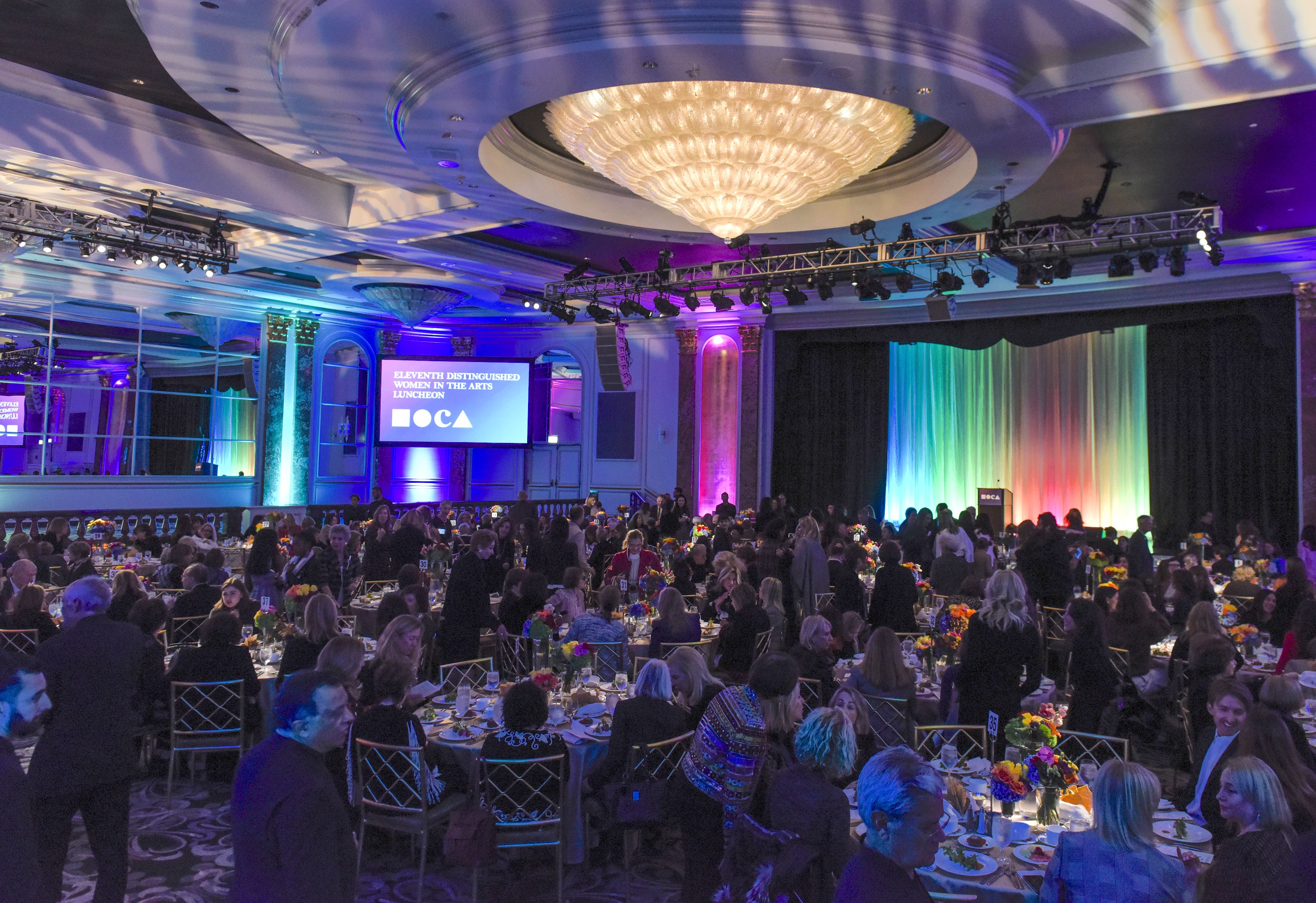

Typically, dinners at museums are exclusive affairs. Invitations target the elite, connected, and well-heeled. Individual tickets to this year’s MOCA gala cost between $2,500 and $10,000 with tables going for $25,000 to $100,000. Annual galas highlight the class-stratification of not-for-profit institutions: Such organizations cater to the public and to the common good, but engage their various constituents (donors, members, artists, staff, everyone else) differently. MOCA’s Engagement Party events offer one more facet of this audience diversification—an unabashedly people’s version—providing similar (gala-spectacular) fare, but for free, during after-work hours, to often unnamed visitors.
Along these lines, an oblique reference for All the Arms We Need—A Dinner Party in Three Acts and its patio setting is the Tennis Court Oath at the start of the French Revolution. On June 20, 1789, Frances’s newly declared National Assembly found themselves locked out of the Salle des États, the hall where they had previously met to radical effect. These 577 representatives of the Third Estate, France’s class of commoners, had recently reached an impasse with members of the First (clergy) and Second (nobility) estates, and had mobilized to create their own representative body.
Blocked from meeting in their usual chambers, the Assembly gathered in the King’s nearby tennis court, where they swore to not separate “until the constitution of the kingdom is established.” Interestingly, some historians argue that the reason the hall was closed was not political maneuvering by the king, but rather that the royal family was still mourning of the death of its oldest son, the Dauphin, two weeks earlier. Ostensibly, political matters were suspended until the King had emerged from this state.
image: Jacques-Louis David, Le Serment du Jeu de paume, 1791; drawing; 40 × 26 inches; Museum and National Estate of Versailles and the Trianon
Published on November 29, 2011
by Kurt Mueller
No Comments