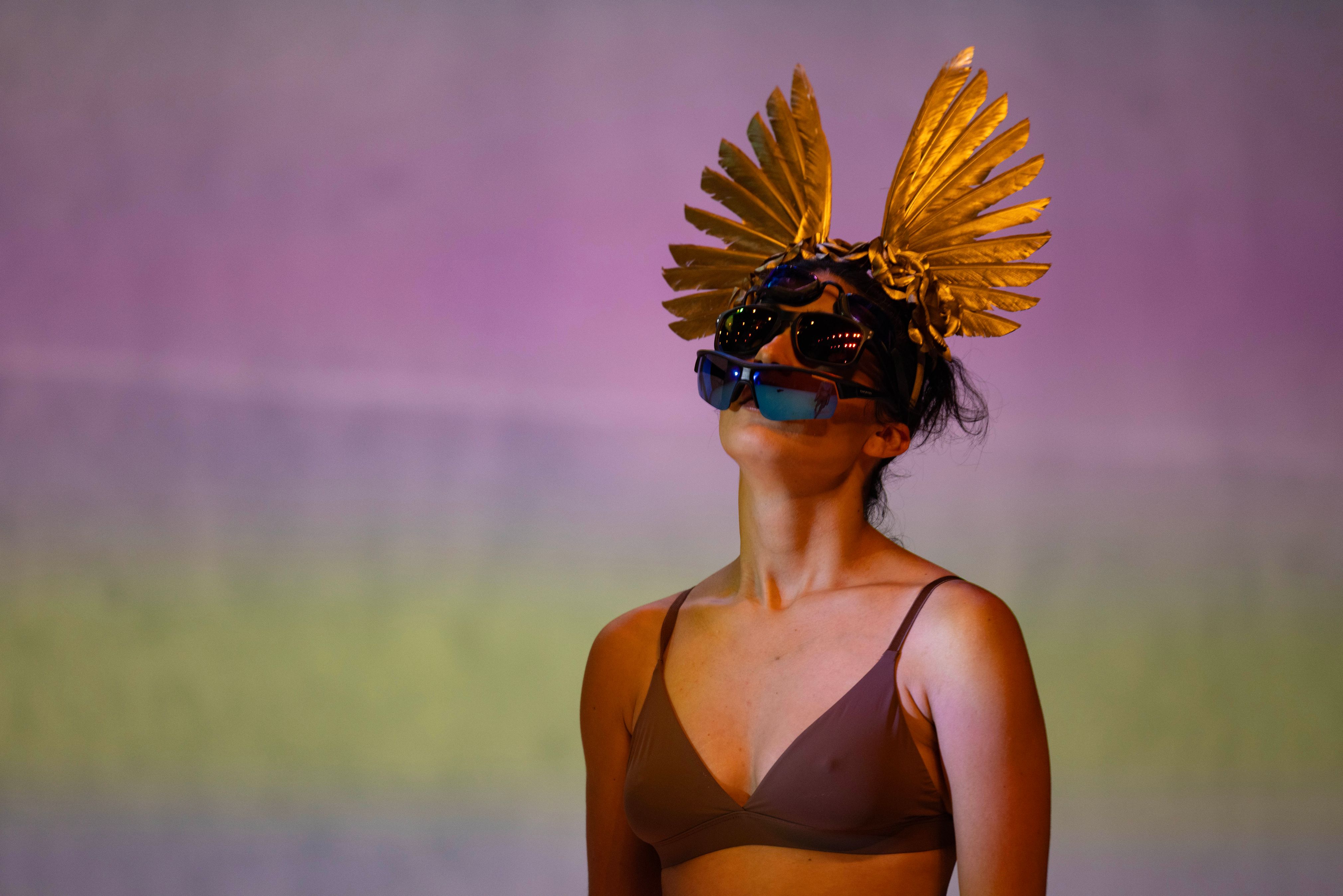
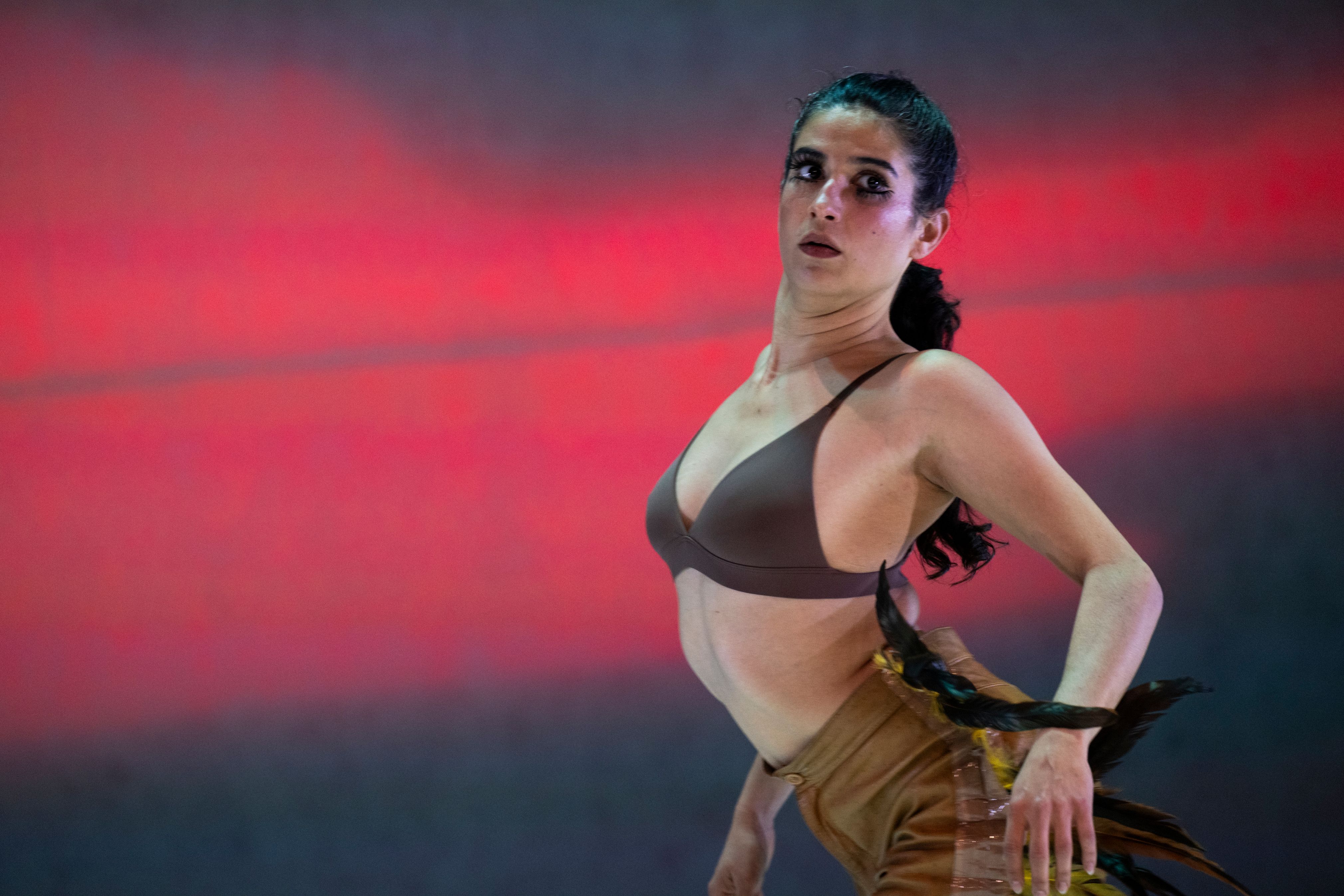
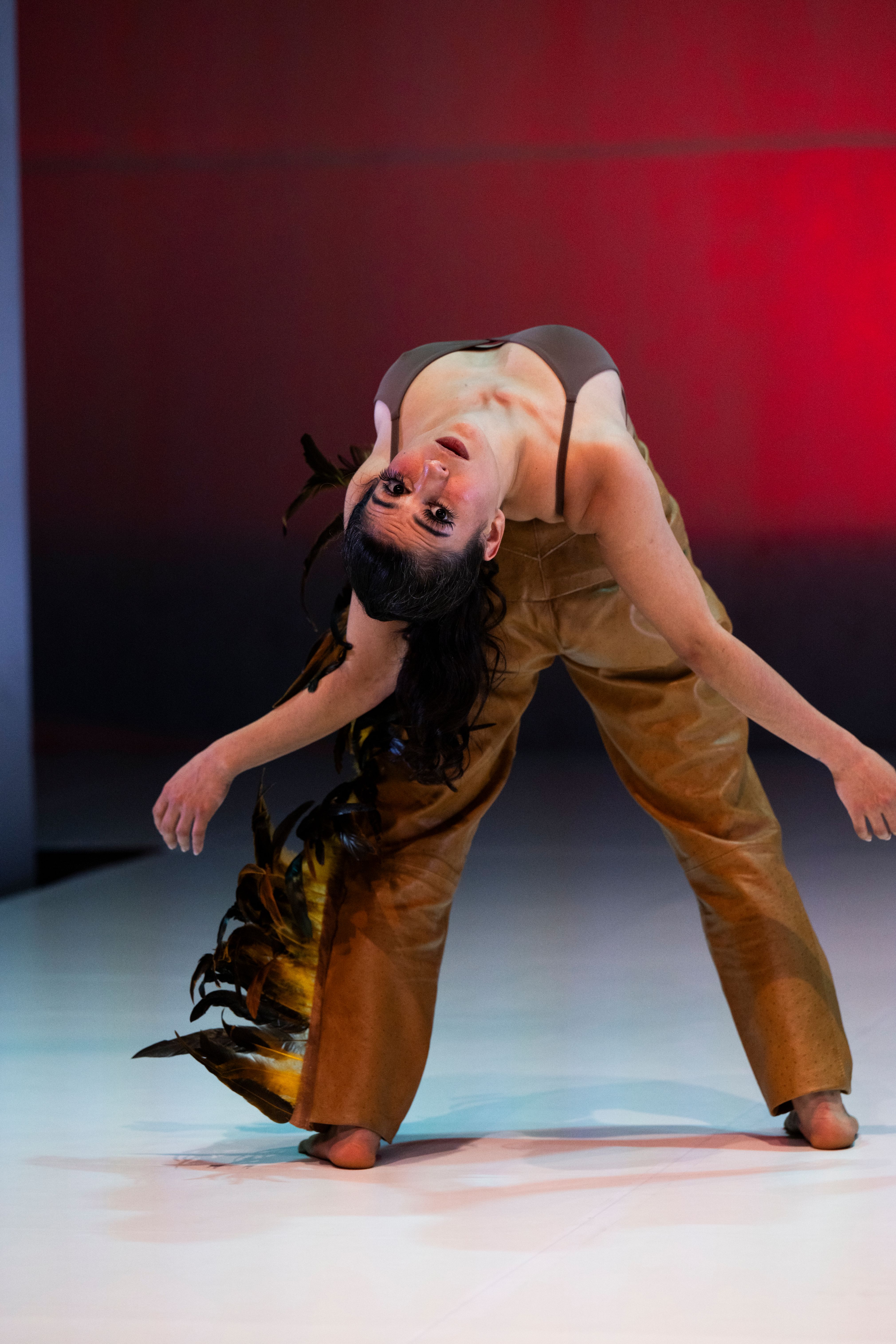
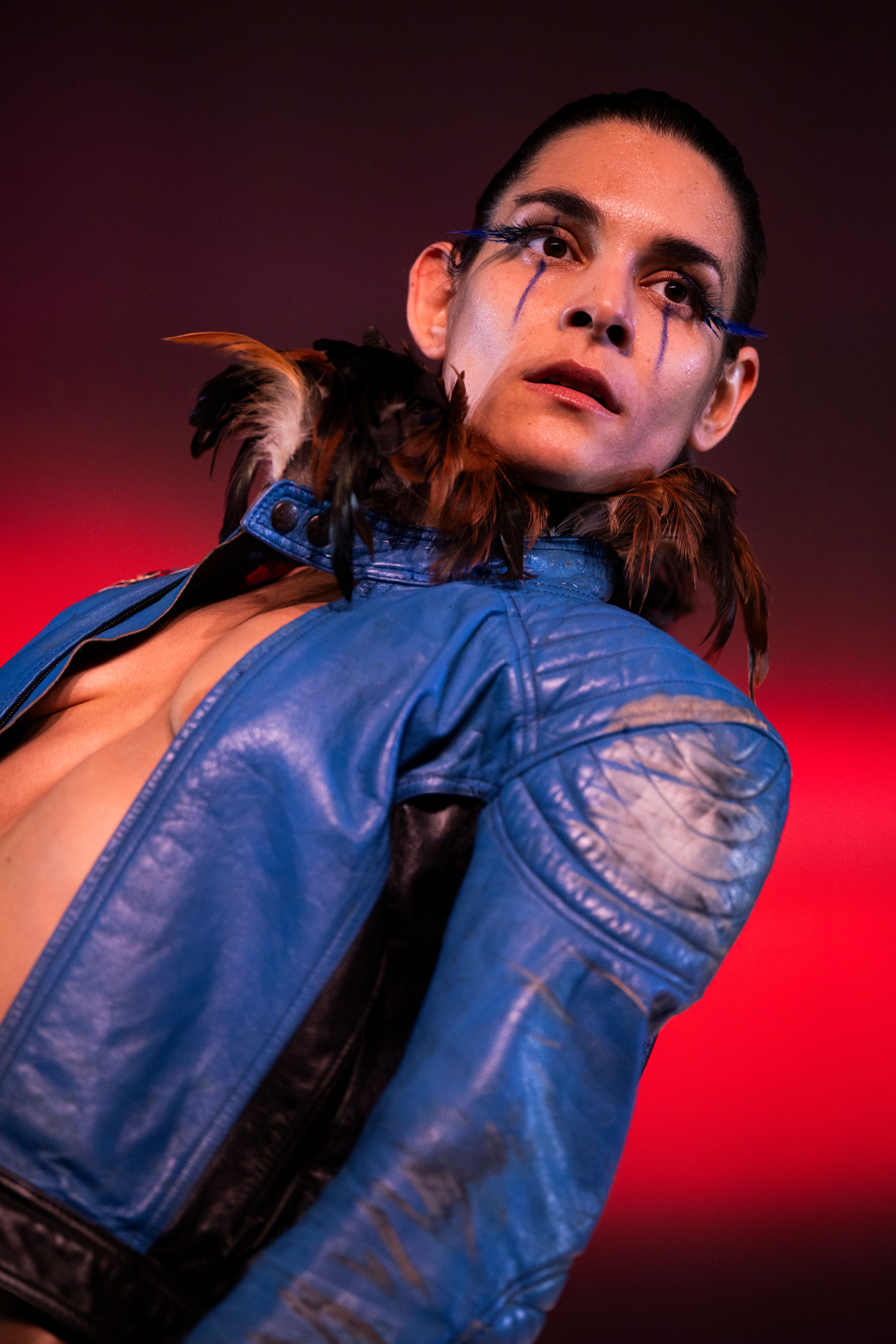
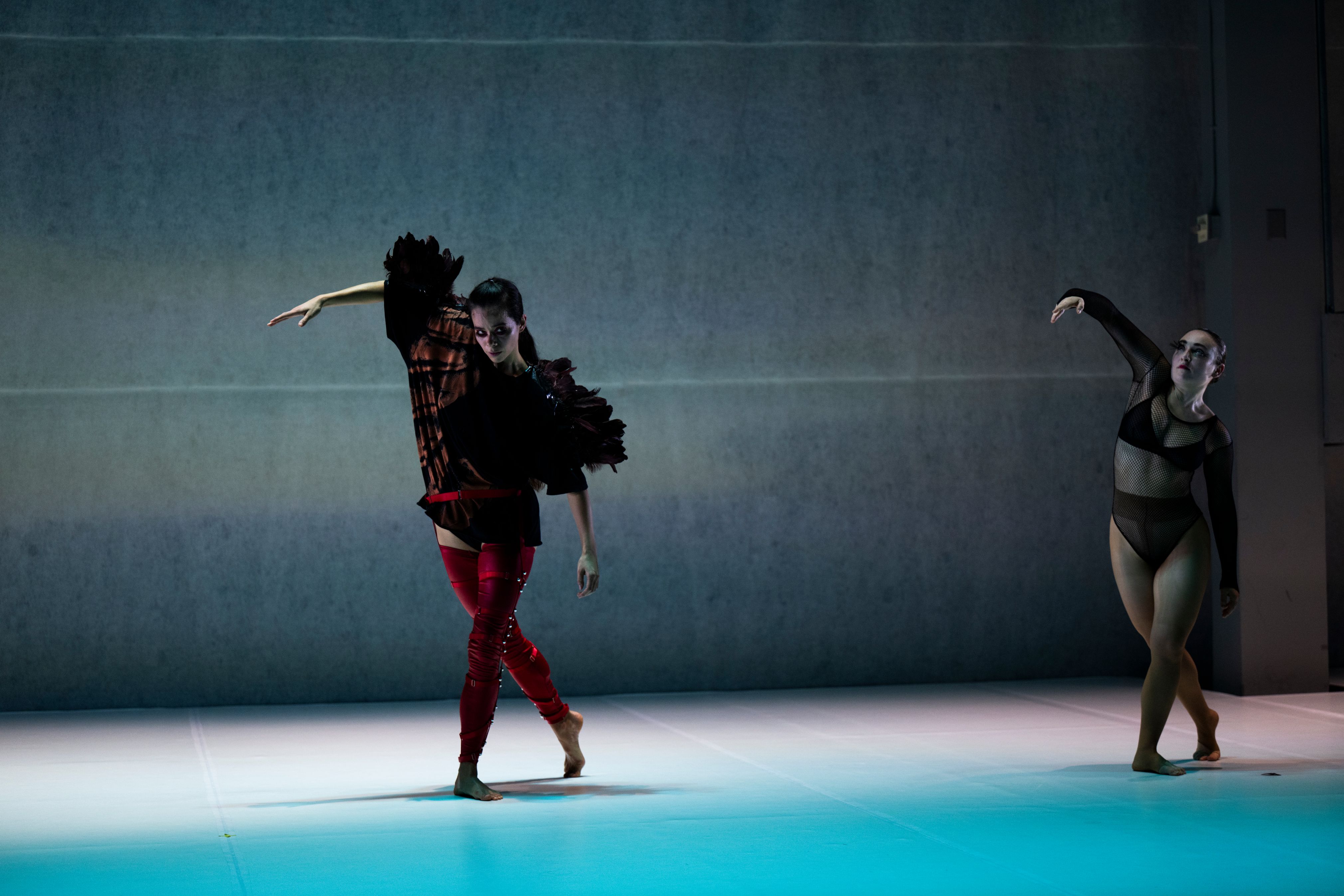
Lenio Kaklea, The Birds. Photo by Albert Vidal and Vèrtex Comunicació.
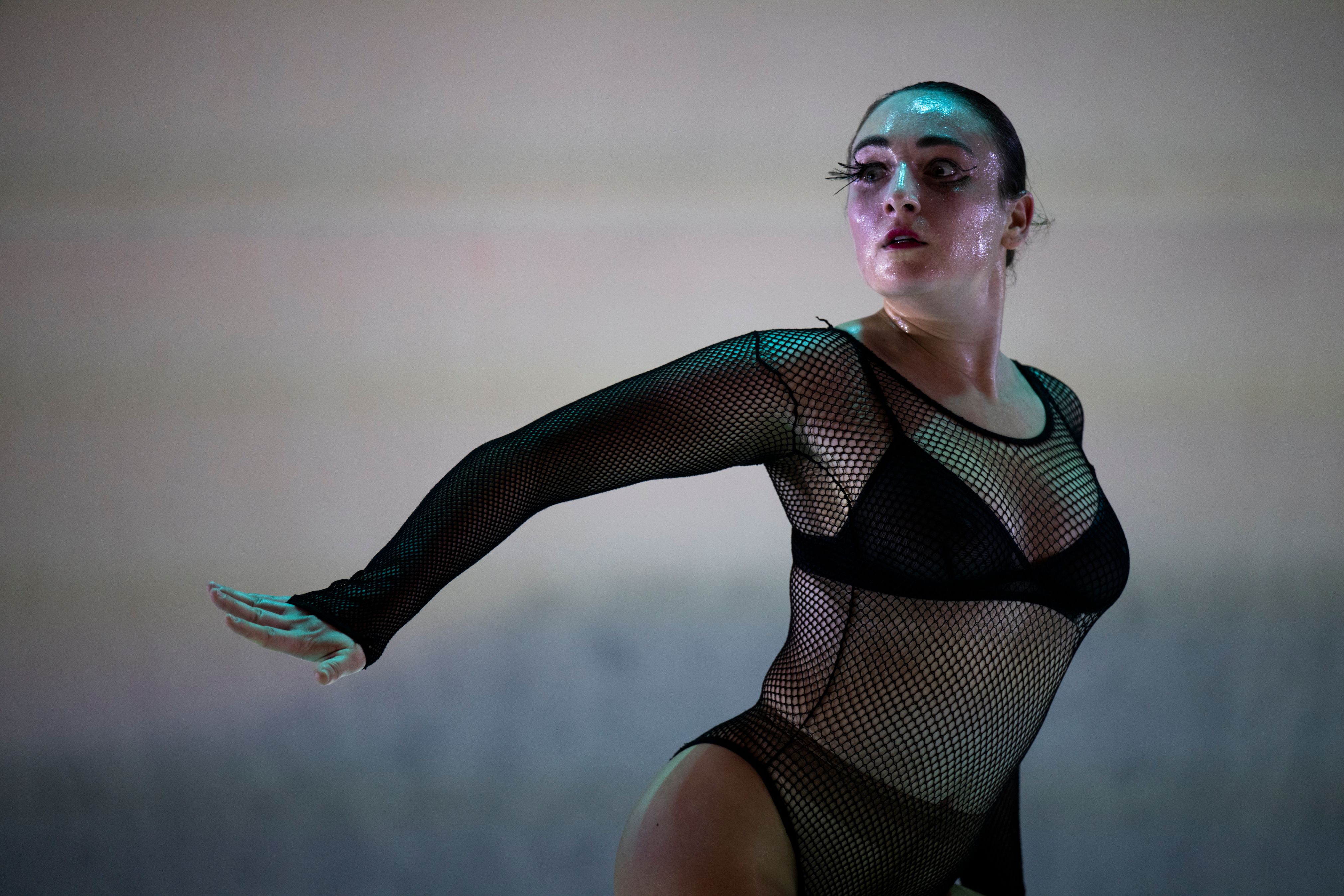

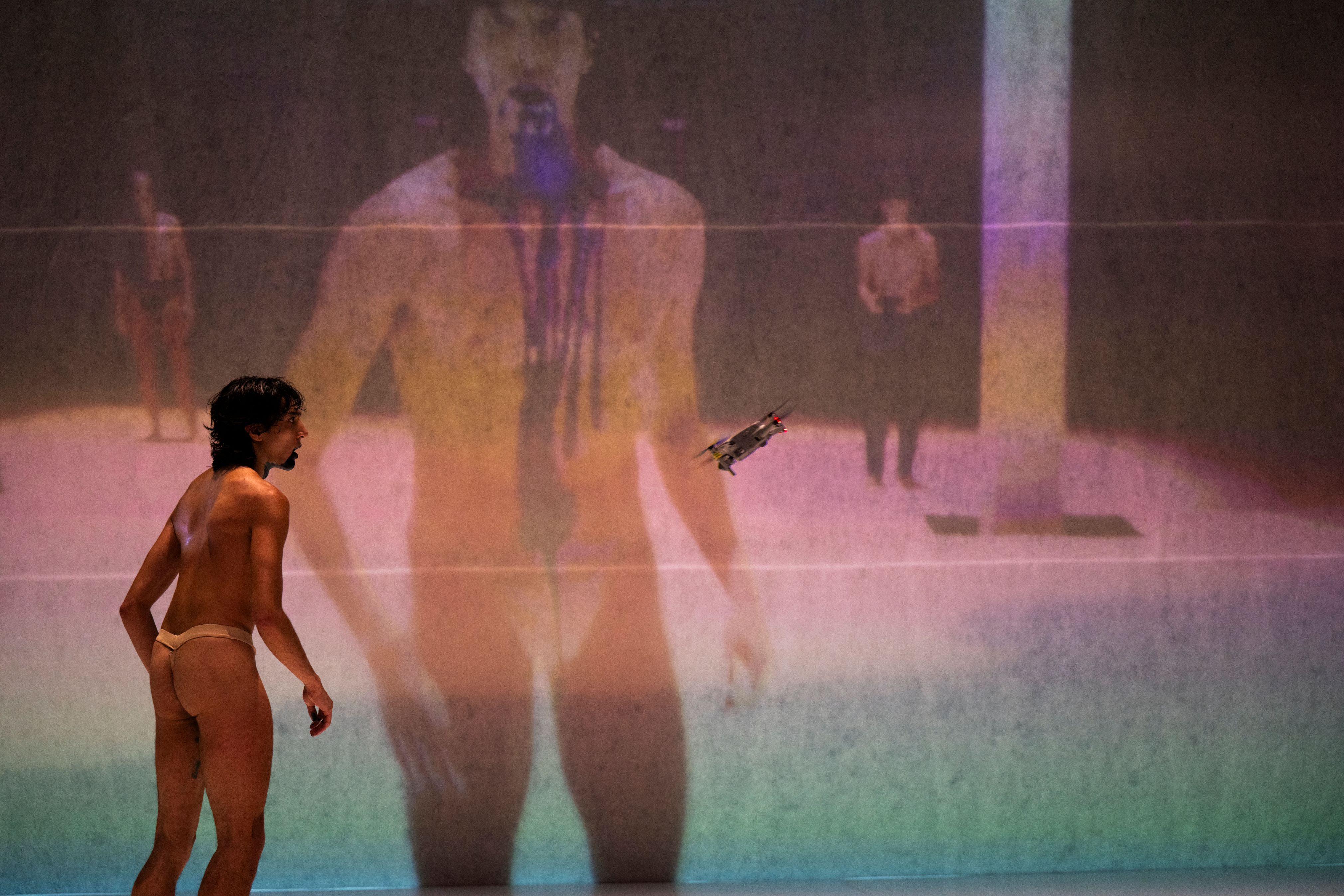
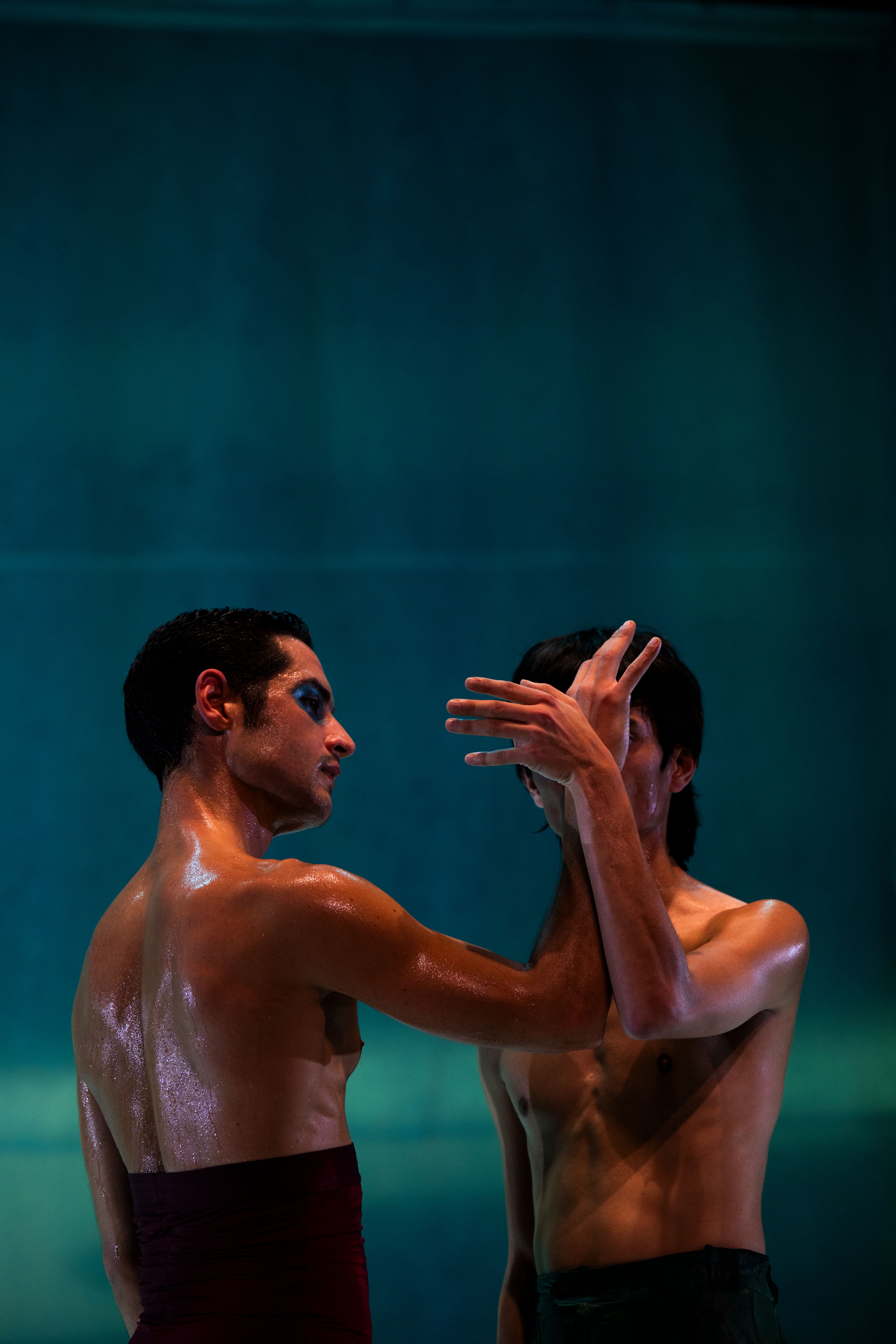
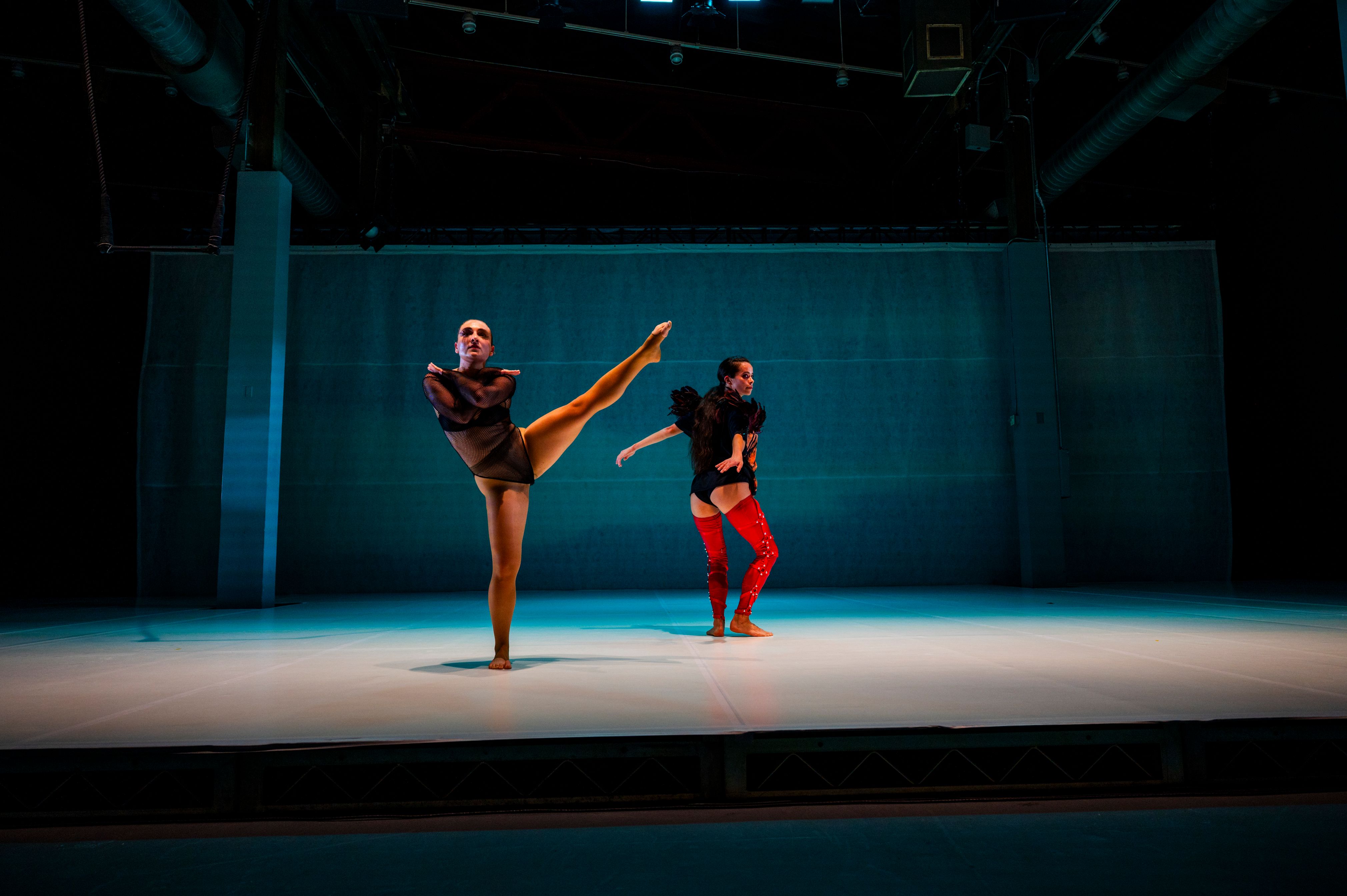
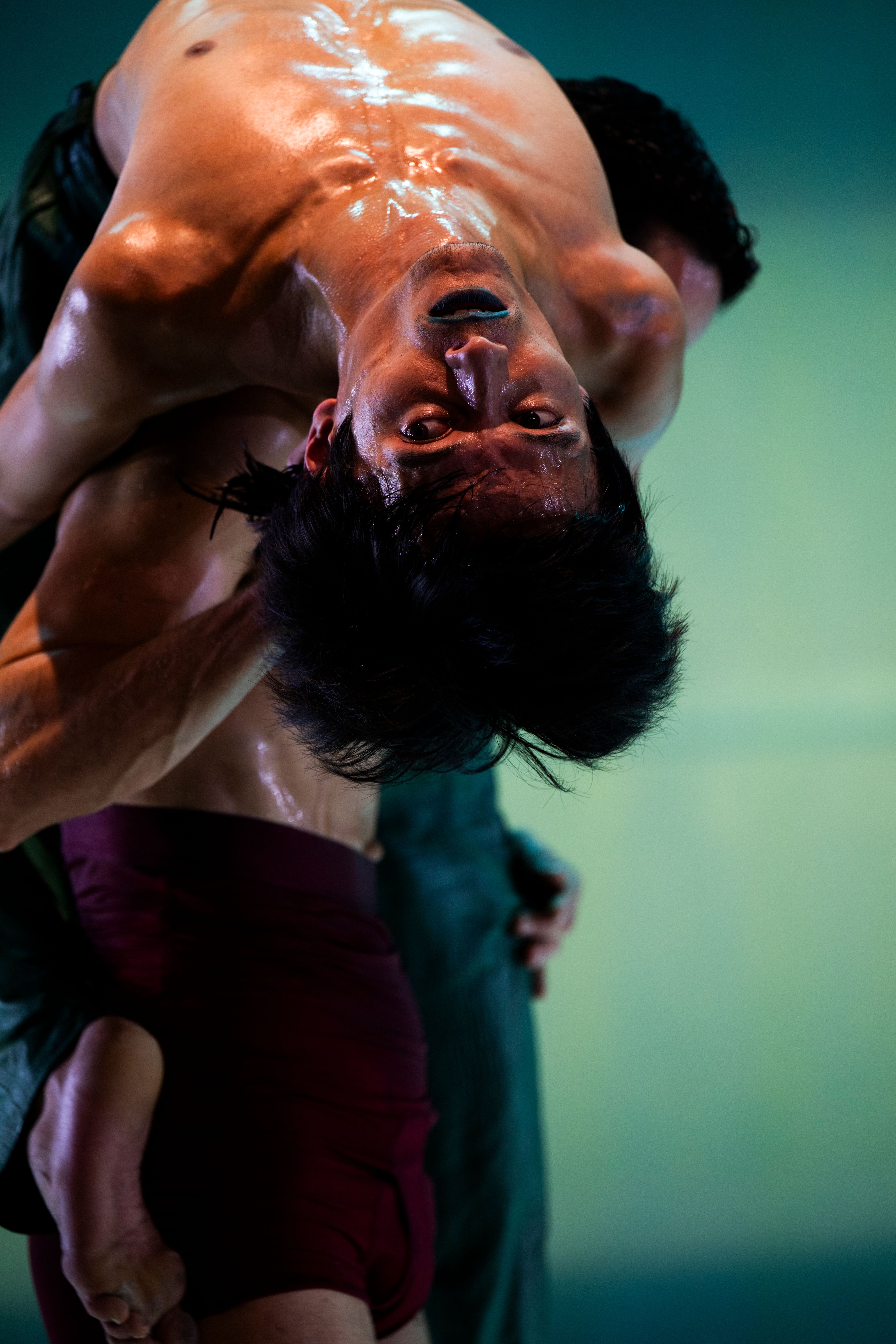
Performed by and developed with Nefeli Asteriou, Liza Baliasnaja, Amanda Barrio Charmelo, Luisa Heilbron, Louis Nam Le Van Ho, Dimitri Mytilinaios, and Jaeger Wilkinson.
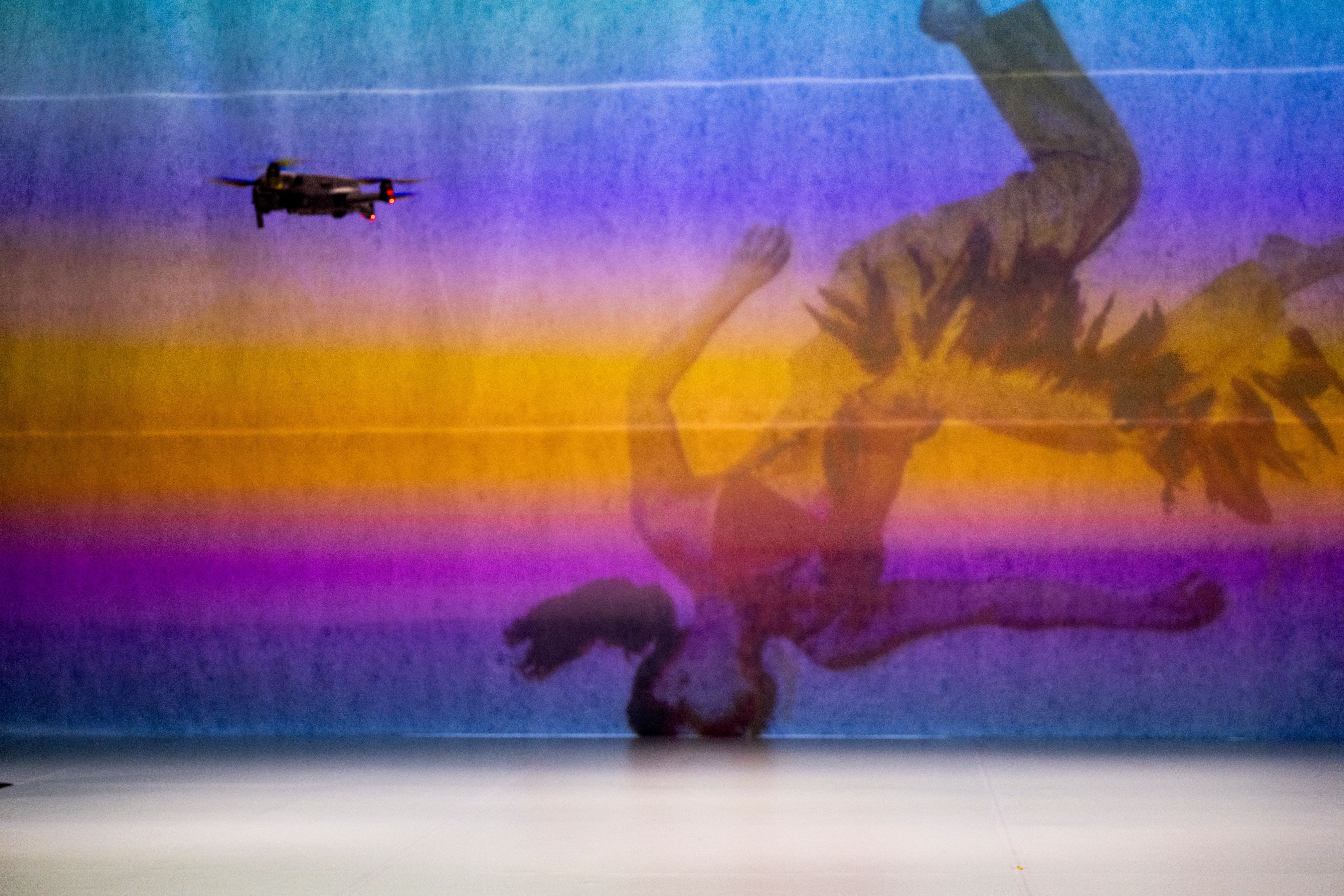
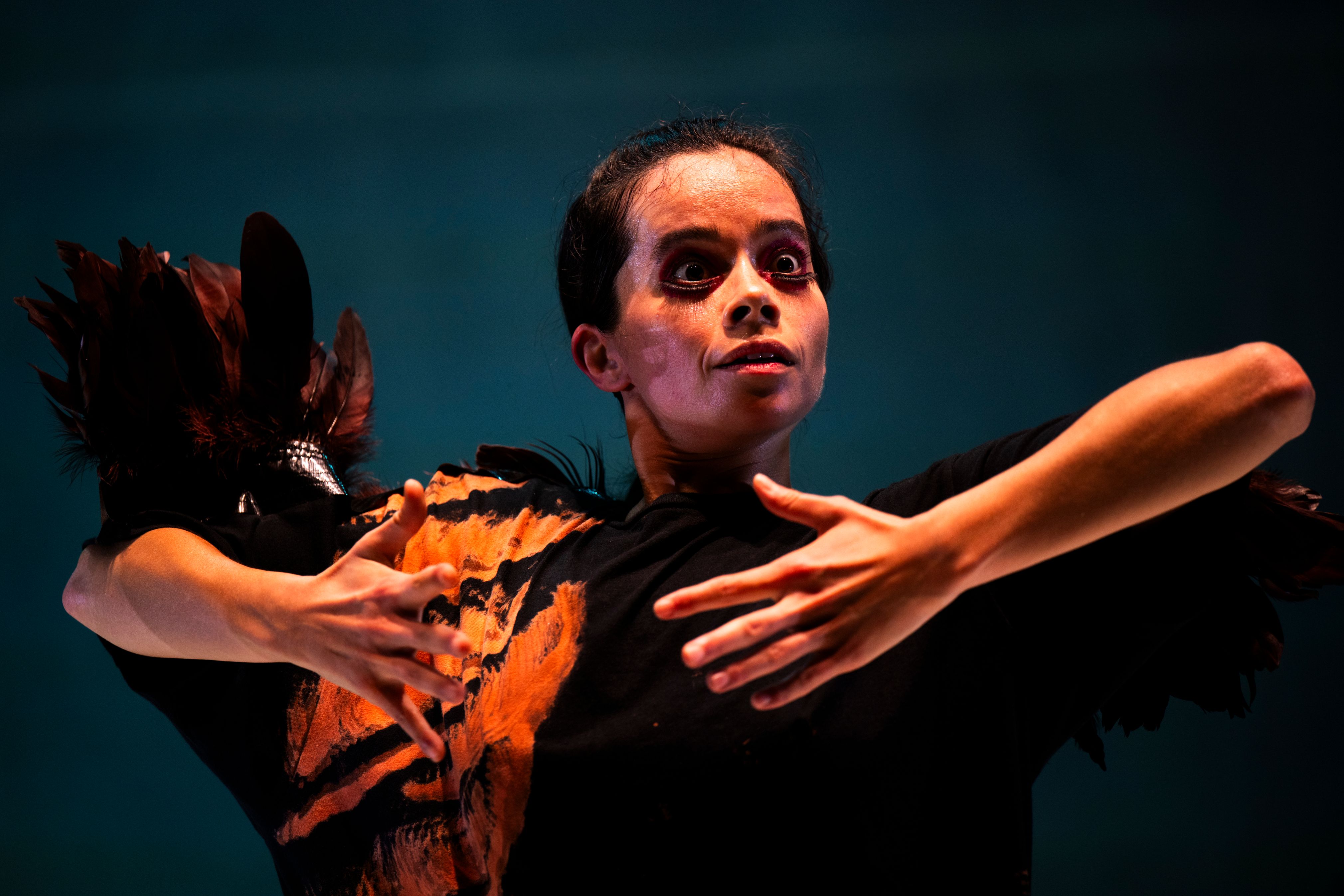
The Birds, 2025, a new dance work by choreographer and artist, Lenio Kaklea (b. Athens, Greece), explores how humanity can relate to living creatures through the prism of dance. The work builds on Kaklea’s earlier project, Agrimi (Fauve), 2023, and continues her examination of the complex relationships between predator and prey, between the watcher and the watched – drawing attention to how birds structure their behavior via a spectacular repertoire of dance and song.
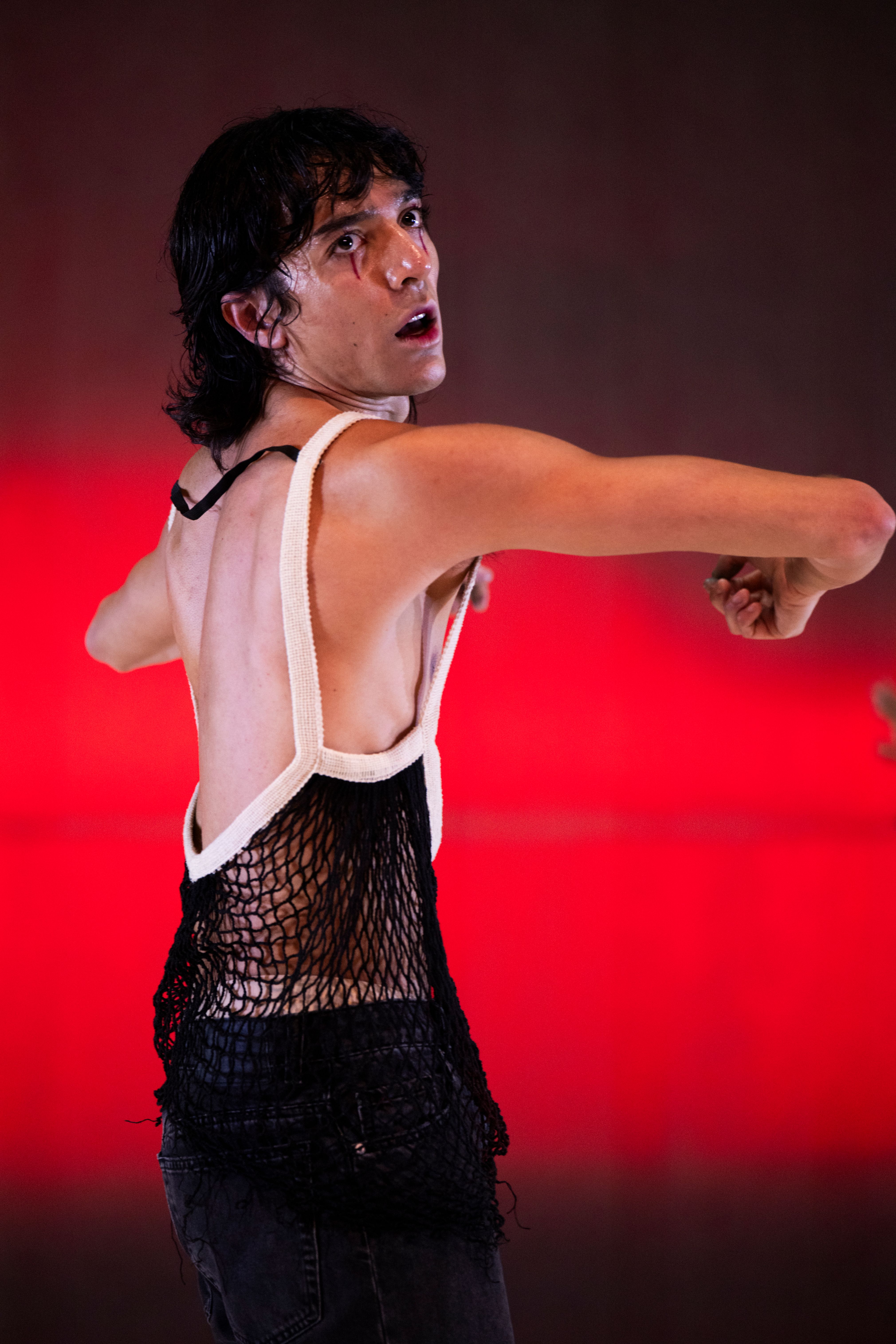
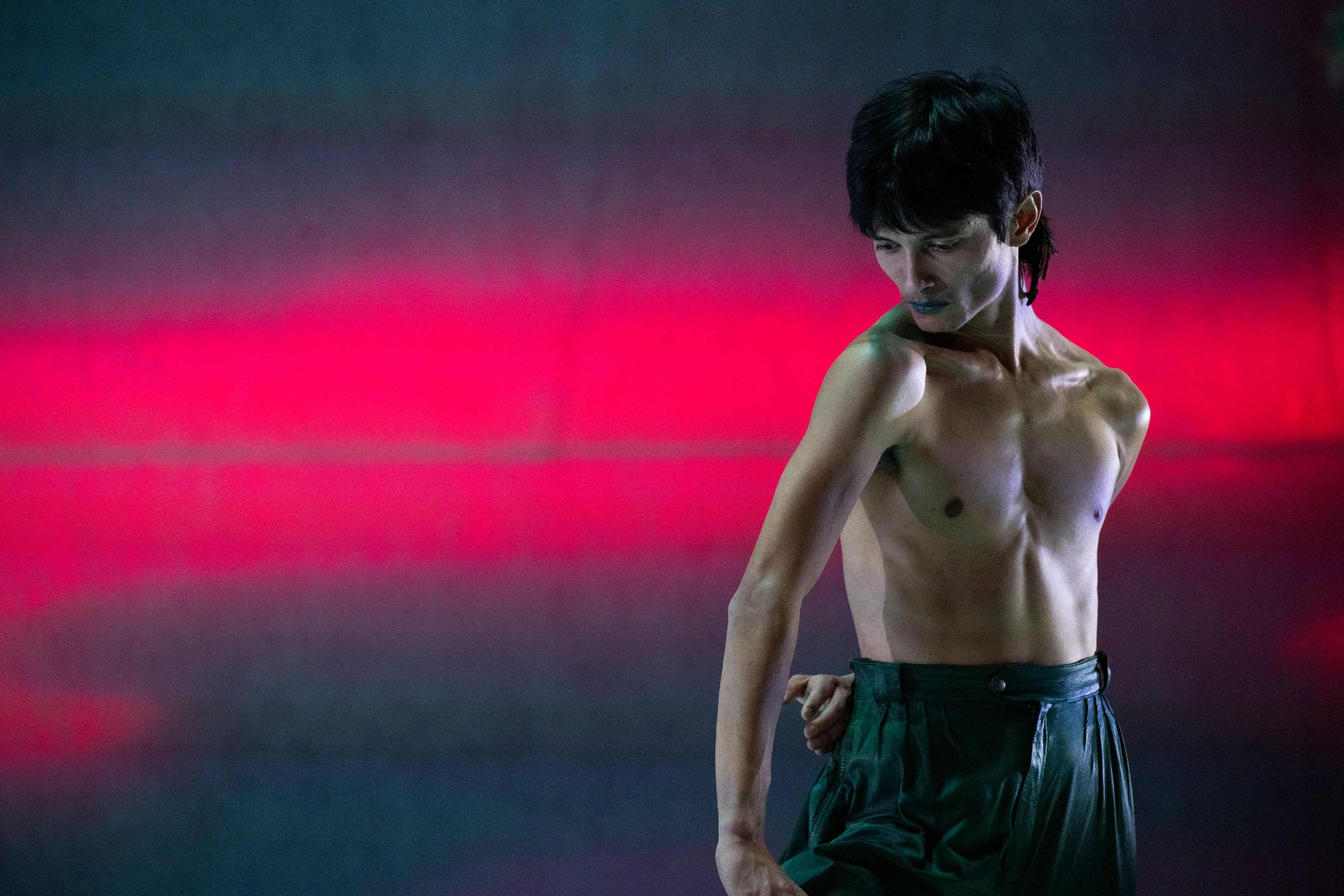
Referencing mating rituals and territorial defense, Kaklea reflects on the innate desire to be seen and heard which is at the heart of our individual and collective identities – both human and non-human. She considers these ideas through a choreography featuring seven hybrid beings who are thrown into a dance that highlights their vibrant individuality, even as they move in unison. Through a subtle play with space, the dancers' gestures resemble planetary movements or flocks of migratory birds, each their own character but part of a larger whole.
Yet, this apparent utopia of individual and collective freedom is shattered by the omnipresent figure of control, here taking the form of a bird of prey, watching overhead. With The Birds, Kaklea questions the contemporary construction of societal control where theatricality is exacerbated, a society in which freedom and subjugation are more than ever in precarious equilibrium.
Duration: 1 hour and 05 minutes
Choreography and Stage Direction: Lenio Kaklea
Performed by and Developed with: Nefeli Asteriou, Liza Baliasnaja, Amanda Barrio Charmelo, Luisa Heilbron, Louis Nam Le Van Ho, Dimitri Mytilinaios, Jaeger Wilkinson
Text: Lou Forster according to Les Guérilleres by Monique Wittig and Les chimères by Gérard de Nerval
Sound Composition and Technical Direction: Eric Yvelin
Scientific Interlocutor: Thierry Aubin, Director of the Acoustic Communication Team CNRS, Paris-Saclay University
Set: Clio Boboti
Lights: Jean-Marc Ségalen
Costumes: Olivier Mulin
Assistant Set Designer: Angeliki Vassilopoulou-Kampitsi
Set Seamstress: Angeliki Baltsaki
Trapeze Instructor: Christina Sougioultzi
Administration and Production Management: Olivier Poujol
Distribution: Fanny Virelizier
Production: abd
Co-production: Biennale of Charleroi Dance/Choreographic Center of Wallonie and Bruxelles (BE), The Museum of Contemporary Art (MOCA) Los Angeles (US), Le festival d’automne (FR), CCN/Ballet de Lorraine (FR), Théâtre de la Vignette (FR), NEXT Festival (BE), CCN/Ballet National de Marseille (FR)
abd receives structural subsidies from the DRAC/Île de France, and the support of the 2025 Consultation of the Convention French Institut-City of Paris.
With the support of the Montpellier Danse Festival, the CNDC/Atelier de Paris and the Carreau du Temple.
Lenio Kaklea is a dancer, choreographer, director, and artist born in Athens and based in Paris. She studied at the National Conservatory of Contemporary Dance in Athens, where she trained in classical ballet, American modern techniques, and repertories such as Martha Graham, Merce Cunningham, and Jose Limon. In 2005, she was awarded the Pratsika Foundation Prize and moved to France, where she studied at the Cndc in Angers under the direction of Emmanuelle Huynh and collaborated with prominent figures of the European dance scene including Alexandra Bachzetsis, Boris Charmatz, Claudia Triozzi, François Chaignaud, and Cecilia Bengolea. In 2011 she completed the SPEAP program, an experimentation in arts and politics, directed by French philosopher, Bruno Latour, at Sciences Po in Paris.
Kaklea’s artistic practice uses a range of media including choreography, text, and video and is informed by feminism and postcolonial critique. In her work, she explores the production of subjectivity and reveals the intimate spaces in which we construct our identity. Her work has been presented by institutions and festivals throughout Europe and the US including the Centre Pompidou, Sadler’s Wells, Kunstenfestivaldesarts, Festival d’Automne, the Serpentine, Bourse de Commerce-Pinault Collection, Palazzo Grassi-Pinault Collection, New York Live Arts, ImPulsTanz – Vienna International Dance Festival, MONTPELLIER DANSE Festival, Athens and Epidaurus Festival, the National Greek Opera, and Les presses du réel. Her performances have joined public and private collections such as the MNAM/Musée national d’Art moderne (Collection Centre Pompidou), CNAP-National Centre of Fine Arts and KADIST Foundation.
Recently Kaklea’s work has been the subject of important commissions. In 2019, she was awarded the Dance Prize of the Hermès Italia Foundation and the Triennial of Milan and created the autobiographical solo Ballad. In 2021, she choreographed Age of Crime, a piece for nine dancers, on the occasion of the bicentenary of the Greek Revolution at the Athens Epidaurus Festival, as well asSonatas and Interludes, the emblematic work for prepared piano by John Cage, accompanied on stage by pianist Orlando Bass. In 2024, she was awarded the 25th Pernod Ricard Award, and created the film An Alphabet for the Camera. The same year, she created Chemical Joy, a stage work for five dancers from BODHI PROJECT Ensemble, a contemporary dance company based in Salzburg and founded by ex-member of the Merce Cunningham Company, Susan Quinn.
Alongside her personal choreographic work, she is engaged in collaborations with other artists. In 2013, the American choreographer Lucinda Childs created a solo for Kaklea on the music by Japanese composer, Ryoji Ikeda. In 2022, she collaborated with the Italian fashion house Bottega Veneta and created a performance at Punta Della Dogana with clothes designed by Matthieu Blazy. In 2025, Kaklea choreographed Craft is our language, a new campaign marking the 50th anniversary of Bottega Veneta iconic leather weave, Intrecciato. The campaign, shot by Jack Davison, features artists from the fields of film, music, literature, and sports, such as Julianne Moore, Dario Argento, Vicky Krieps, Troy Kotsur, Tyler The Creator, Lorenzo Viotti, Zadie Smith, and Lorenzo Musetti.
Following the performance on Saturday, November 8th Lenio Kaklea and members of the cast will join Associate Curator, Alex Sloane for a short conversation about The Birds and its development.
Wonmi’s WAREHOUSE Programsis organized by Alex Sloane, Associate Curator, and is produced by Amelia Charter, Producer of Performance and Programs with Michele Huizar, Performance Coordinator, The Museum of Contemporary Art Los Angeles.
A Q&A with Lenio Kaklea
Why birds?
I wanted to explore a popular theme that is also dear to me. The dramatic decline in bird populations over the last forty years has become a symbol of the struggle to protect biodiversity. In 1962, Rachel Carson's Silent Spring, one of the first ecological manifestos, focused on the disappearance of birdsong accompanying the changing seasons. Furthermore, birds have played a significant role in numerous indigenous rituals around the world and have inspired iconic choreography in classical, neo-classical, and modernist pieces by renowned artists such as Marius Petipa, Michel Fokine, Noa Echkol, and Merce Cunningham. They have also been the subject of famous theatrical works (Aristophanes), as well as mainstream and queer cinema (Alfred Hitchcock and Ulrike Ottinger). Birds have therefore accompanied my imagination since childhood, and I have recognized the enormous potential in it and decided to address the theme myself.
What kind of research or physical exploration guided the creation of these hybrid beings and their movement language in The Birds?
I took up birdwatching in 2021. Observing several accessible endemic bird species in northern France helped me identify certain movement principles. This was largely informed by the obvious fact that humans and birds have different anatomical structures and movement capabilities. When we first entered the studio, our main task was to imagine a human body that moved differently. We explored the timing and rhythm that birds use when resting or hunting, as well as how they transfer weight and perceive space in order to stand, walk and fly. These movement explorations shaped most of the material presented in the show.
The other part of the process was informed by my research into the work of philosopher Vinciane Despret and bioacoustic scientist Thierry Aubin. Their work taught me a great deal about birds' territorial behaviour and their ability to express not only signs, but also emotions, desires and needs. I structured the piece around themes that organize the lives of birds, but which can also be observed in human societies, such as long migratory journeys, territorial conflicts and parades.
For birds in the wild, dance and song are central to bird behavior. How did you think about sound (whether vocal, environmental, or musical) as part of the choreography’s structure?
Eric Yvelin (The Birds:Sound Composition and Technical Direction) was granted access to the bioacoustics laboratory database of the CNRS (Centre National de la Recherche Scientifique), which contains a vast number of field recordings. The aim is to study them all with the objective of decoding the "language" of each species. Eric used some of these recordings as a starting point, but went on to create an ambient or melodic sound environment that could have an interesting dialogue with the choreography.
Can you tell us about the themes of surveillance and control explored in The Birds?
The first part of the piece presents a queer utopia, where hybrid beings effortlessly transition between rhythmic and repetitive group movements, silence and immobility, and individual scores. The piece progressively introduces darker tones, associating immobility with death, observation with control, and surveillance with war. Although I am truly fascinated by the concept of birds, I did not wish to idealize their world, which is subject to constant territorial negotiations, conflicts, cruelty, and domination.
Major support is provided by Nora McNeely Hurley and Manitou Fund.
Generous support is provided by the MOCA Environmental Council.
Additional support is provided by Villa Albertine.
This performance is made possible by generous endowment support from Wonmi & Kihong Kwon and Family.
Performances at MOCA are supported by the MOCA Fund for Performance with generous funding provided by Betsy Greenberg and The Lenore S. and Bernard A. Greenberg Fund.
Wonmi's WAREHOUSE Programs is founded by Wonmi & Kihong Kwon and Family.