About MOCA
Founded in 1979, MOCA is the defining museum of contemporary art. In a relatively short period of time, MOCA has achieved astonishing growth; a world-class collection of nearly 8,000 objects, international in scope with deep holdings in Los Angeles art; hallmark education programs that are widely emulated; award-winning publications that present original scholarship; groundbreaking monographic, touring, and thematic exhibitions of international repute that survey the art of our time; and cutting-edge engagement with modes of new media production.
With two distinct venues in LA—MOCA Grand Avenue, and The Geffen Contemporary at MOCA—and Michael Heizer’s seminal artwork Double Negative (1969-70) in the Nevada desert, we engage audiences through an ambitious program of exhibitions, educational programs, and publishing.
MOCA Grand Avenue
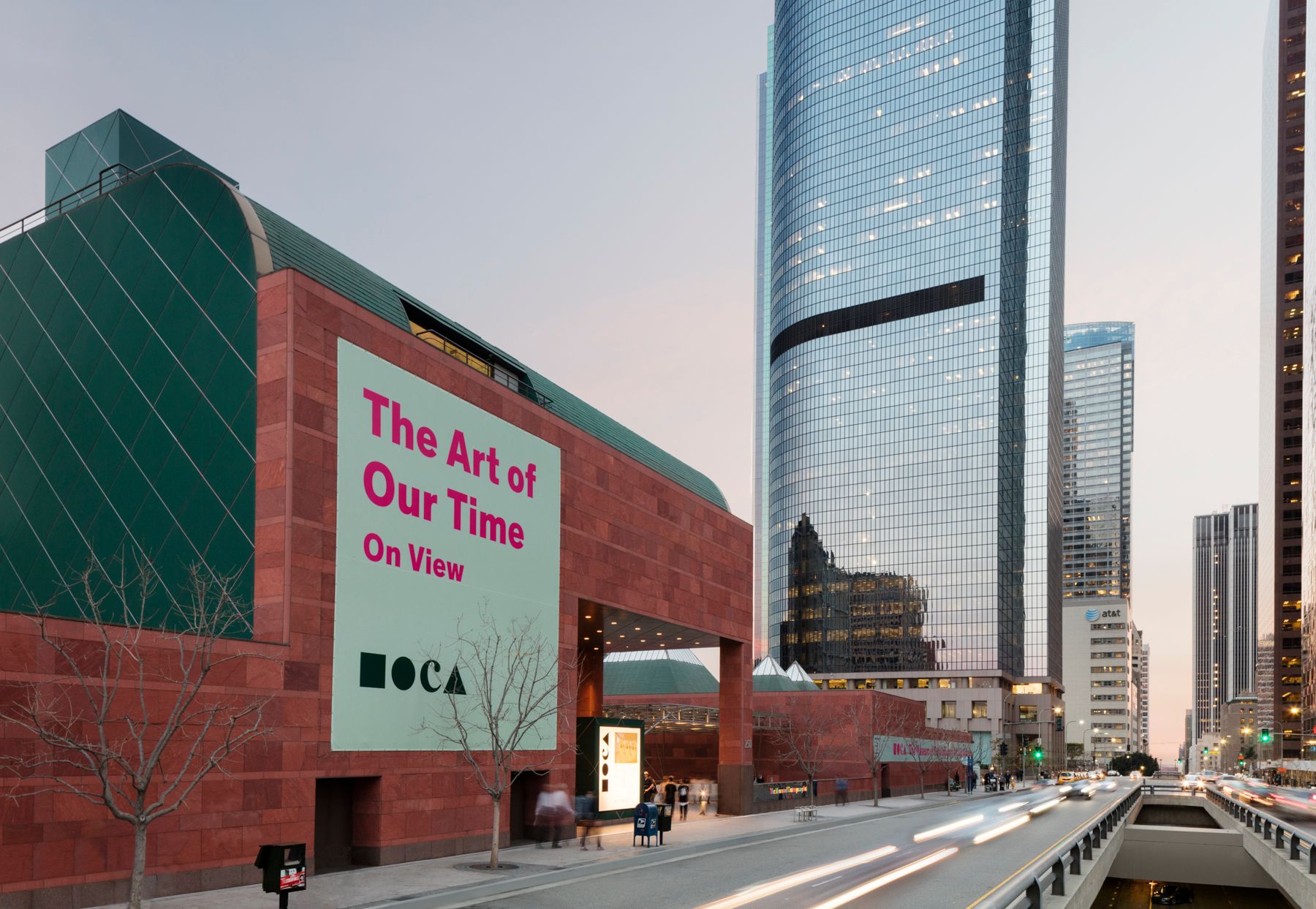
MOCA Grand Avenue. Courtesy of The Museum of Contemporary Art, Los Angeles. Photograph by Elon Schoenholz.
Arata Isozaki's design for MOCA's Grand Avenue building announced the museum as a major architectural and cultural presence in downtown LA. When MOCA selected the Japanese architect in the early 1980s, he had never before completed a project in the US, though he was already internationally recognized for his association with Metabolism, one of the most influential architectural movements of the 20th century.
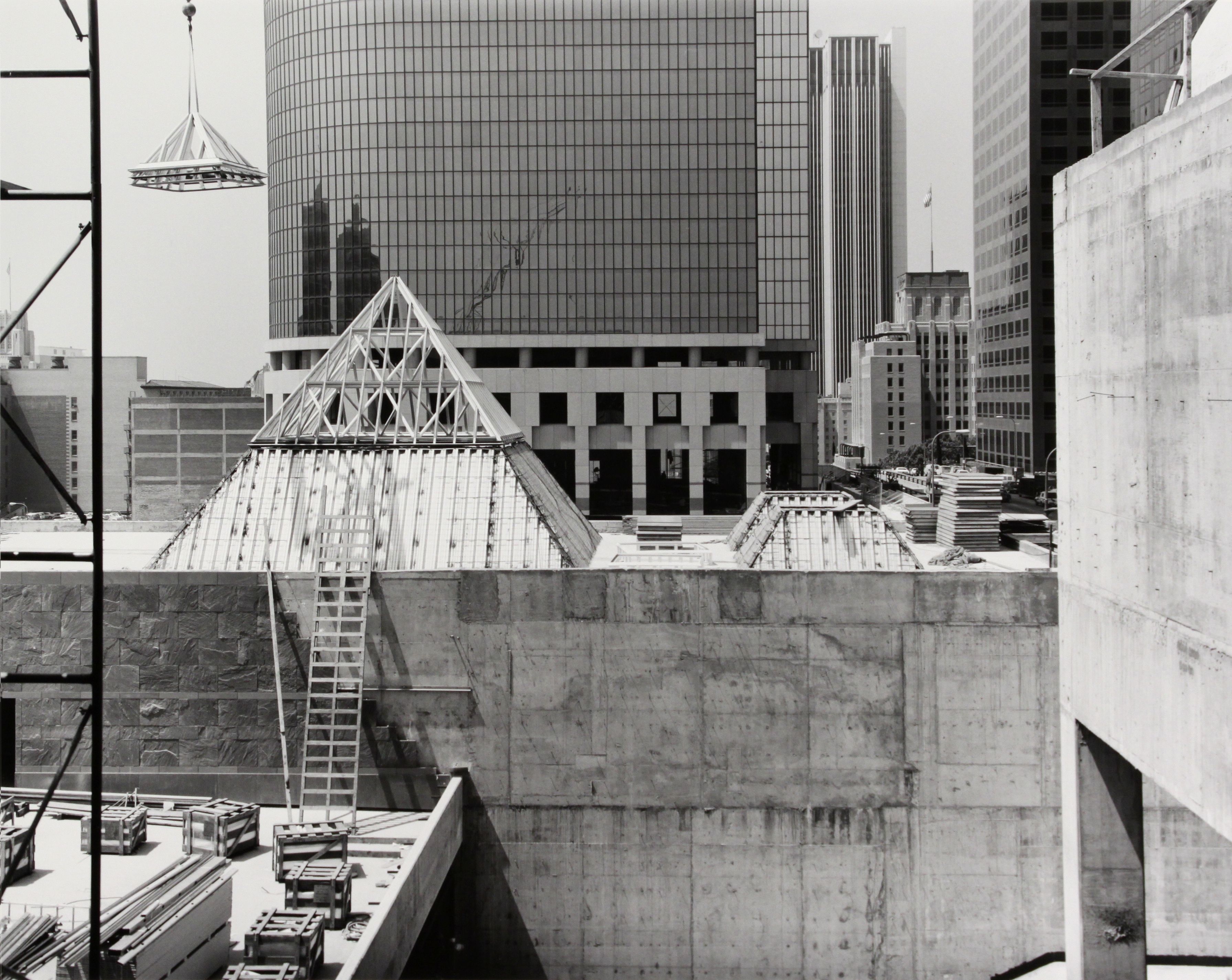
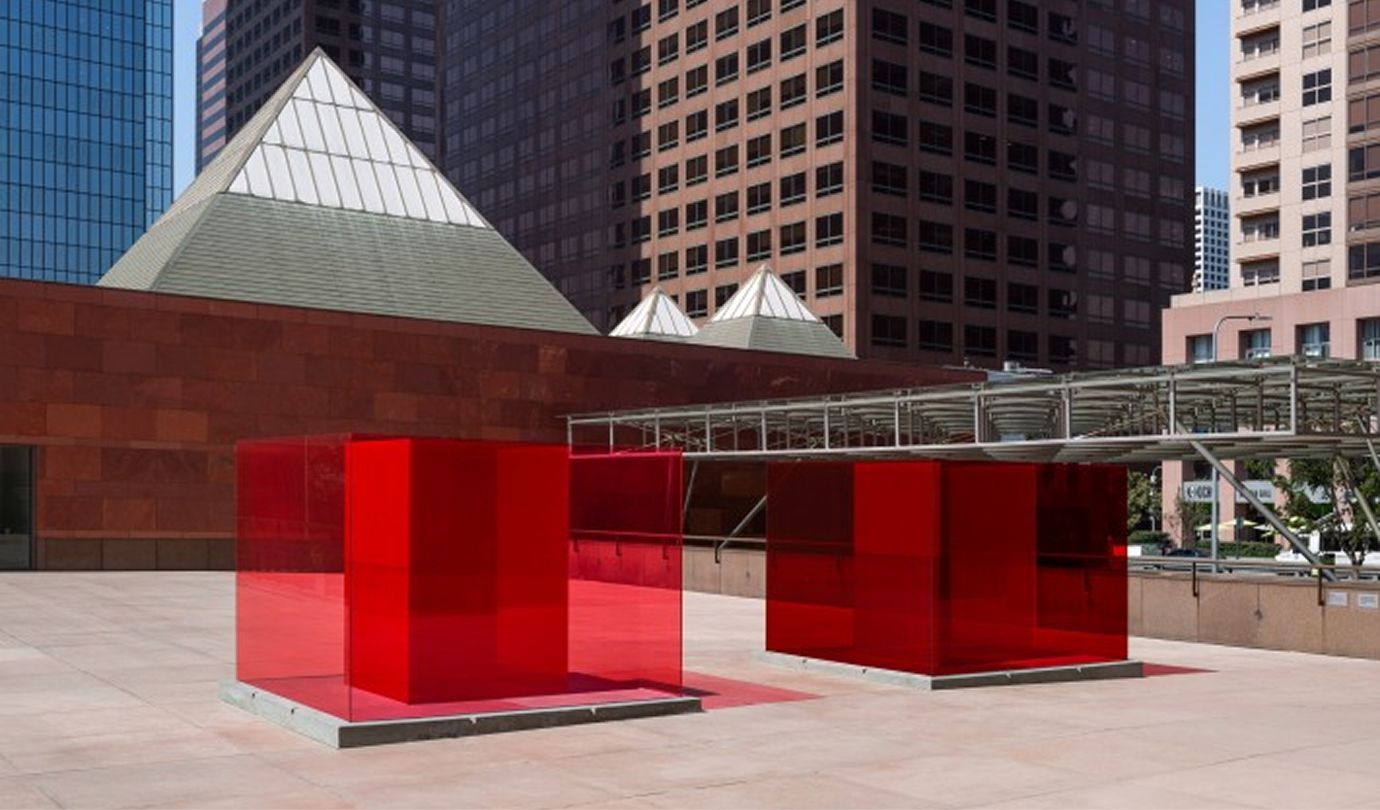
Joe Deal, Lowering Gallery B Pyramids, August 1984–January 1986, gelatin silver print, paper: 14 x 17 in. (35.56 x 43.18 cm). The Museum of Contemporary Art, Los Angeles. © The Estate of Joe Deal. Courtesy Robert Mann Gallery, New York
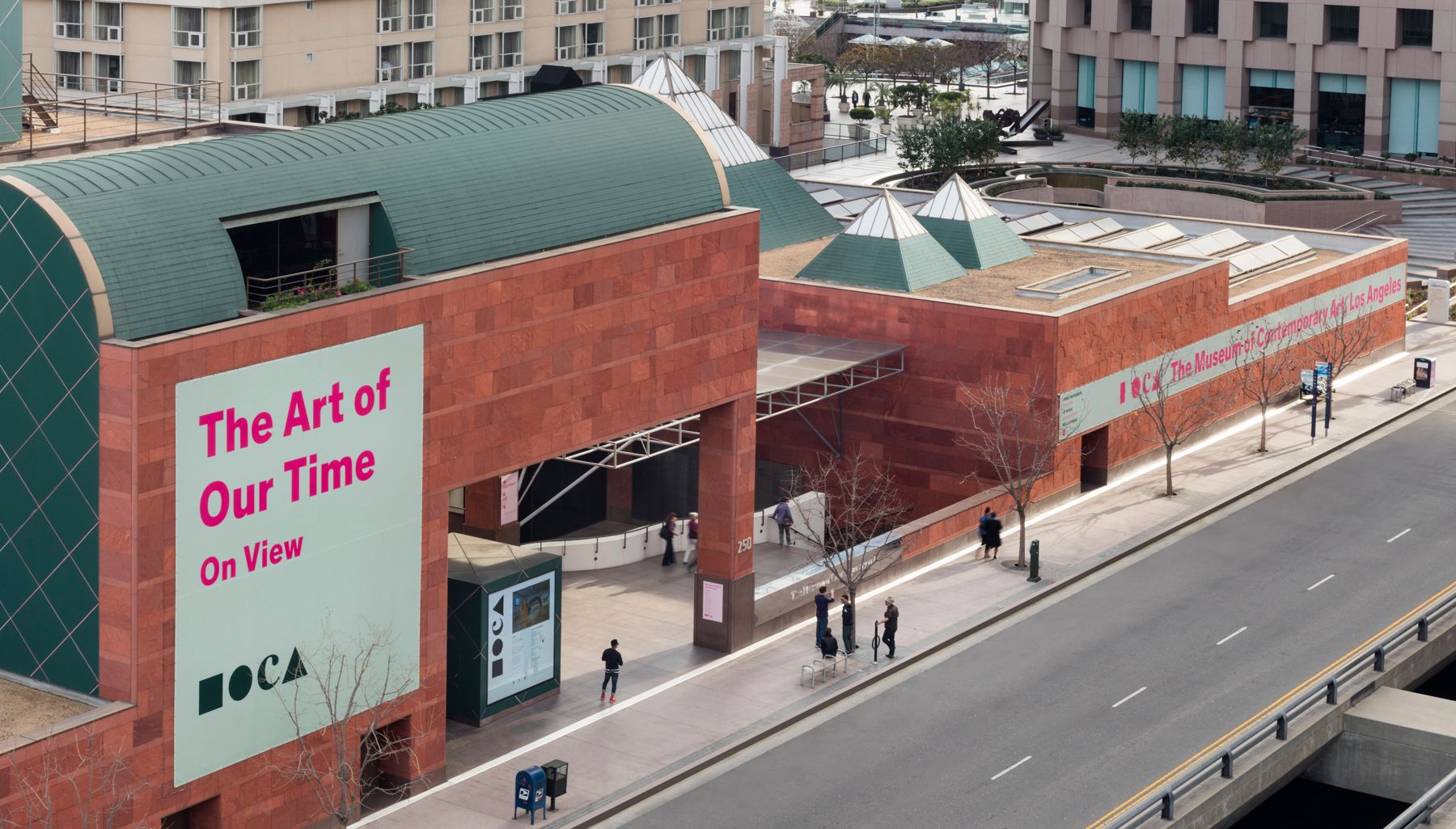
MOCA Grand Avenue. Courtesy of The Museum of Contemporary Art, Los Angeles. Photo by Elon Schoenholz.
The Geffen Contemporary at MOCA

Frank Gehry's renovation defined The Geffen Contemporary as one of LA's most distinctive spaces for contemporary art, preserving much of the building's industrial character while adapting it for museum use. Originally built in 1947 by the LA firm A. C. Martin & Associates as a warehouse complex for Union Hardware Company, the building was later used by the city before falling largely vacant by the early 1980s. In 1983, MOCA leased the complex from the city for just $1 a year, and Gehry transformed it into a bold and flexible museum space that remains central to MOCA's identity.
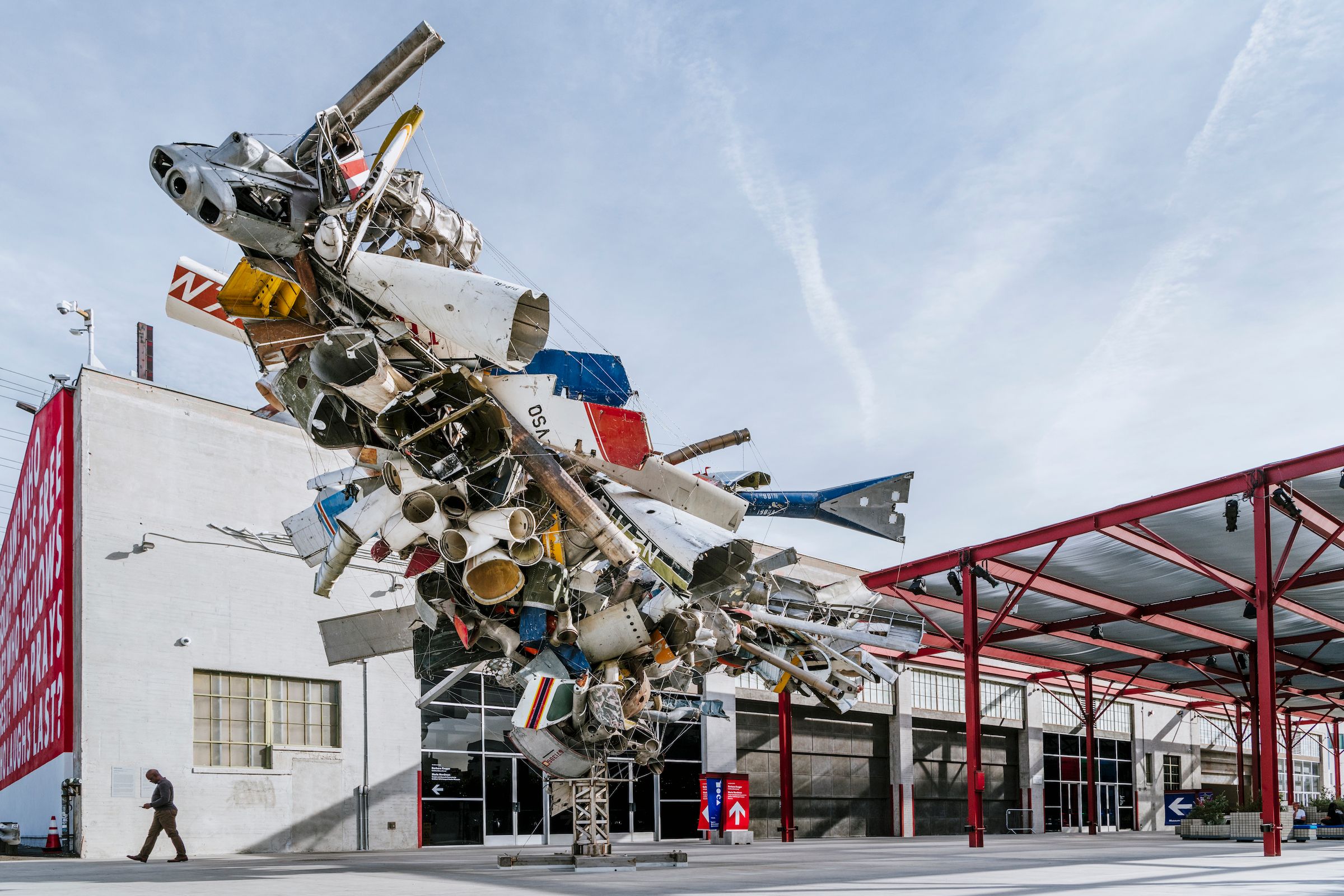
Nancy Rubins, Chas’ Stainless Steel, Mark Thompson’s Airplane Parts, About 1,000 Pounds of Stainless Steel Wire, and Gagosian’s Beverly Hills Space at MOCA, 2002, stainless steel and airplane parts, 300 x 648 x 396 in. (762 x 1645.9 x 1005.8 cm). Purchase in honor of Beatrice Gersh with funds provided by the Acquisition and Collection Committee; The Broad Art Foundation; Linda and Bob Gersh; David, Susan, Steven, and Laura Gersh; and Eugenio Lopez. © Nancy Rubins. Photo by Brian Guido.
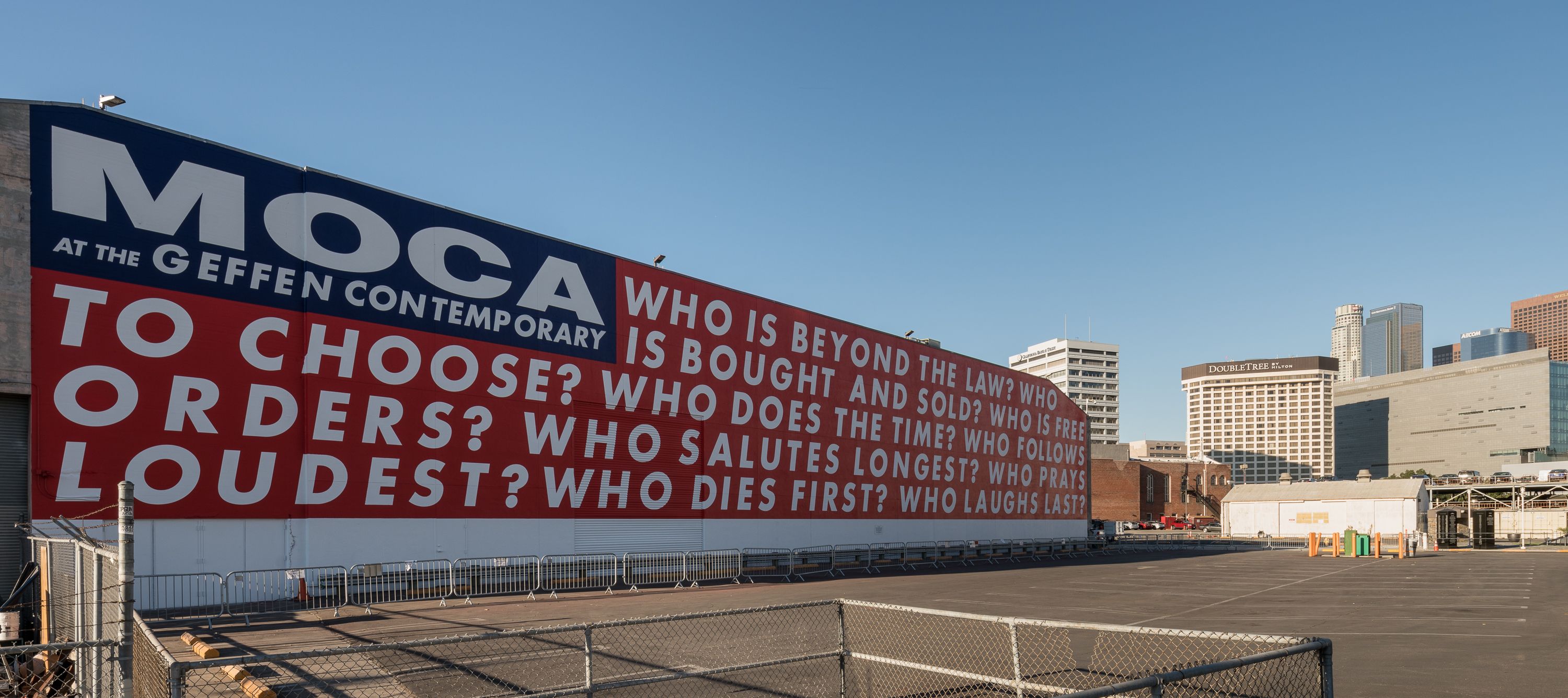
Barbara Kruger, Untitled (Questions), 1990/2018, on view October 20, 2018–November 2020 at The Geffen Contemporary at MOCA, photo by Elon Schoenholz
Barbara Kruger, Untitled (Questions), 1990/2018. On view at The Geffen Contemporary at MOCA. Photo by Elon Schoenholz.