
The Temporary Contemporary
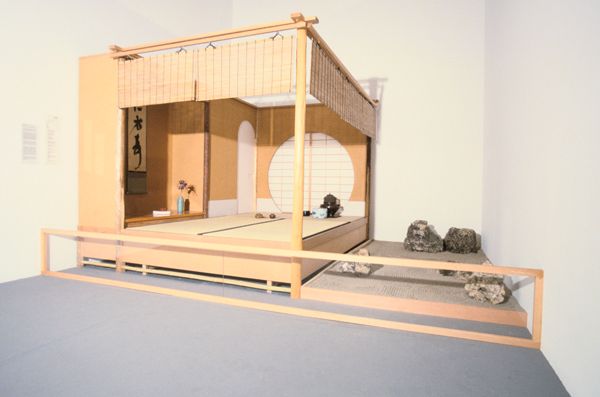
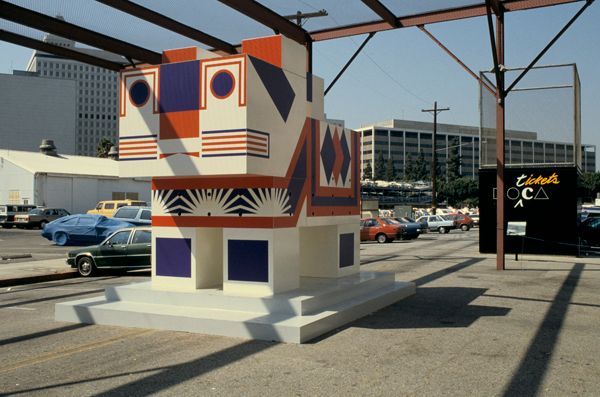
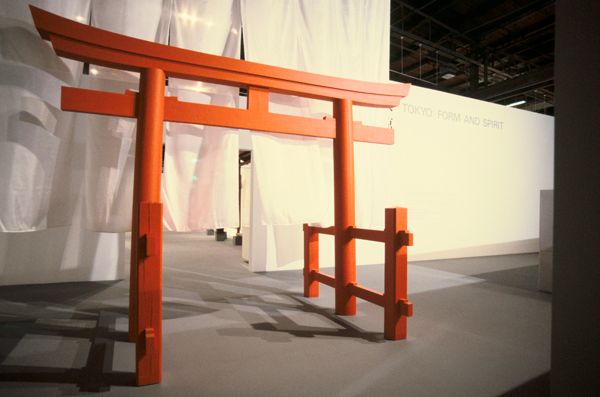
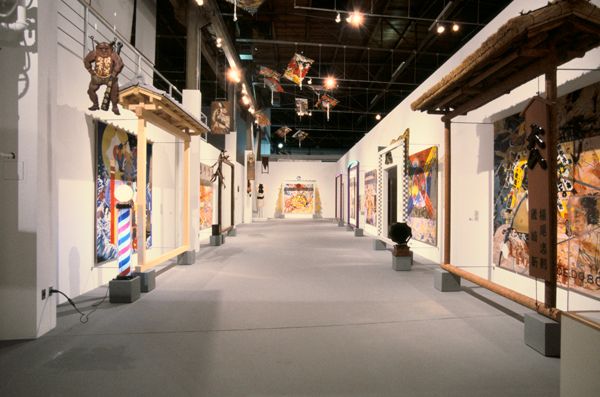
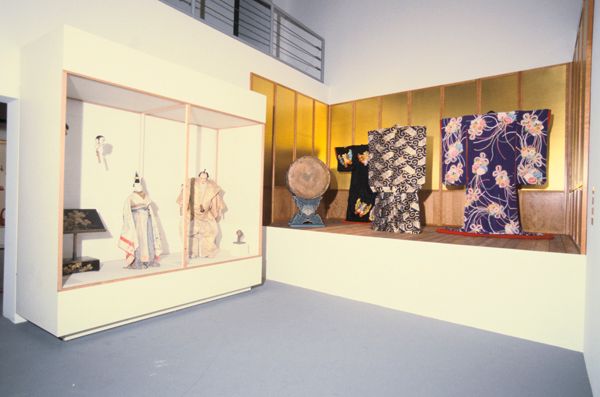
Exploring the inventiveness and continuities of Japanese design from the Edo period (1603-1868) to the 1980s, the exhibition juxtaposed earlier Edo design artifacts—such as painted screens, ceramics, lacquerware, costumes, and prints—with commissioned “environments” from major contemporary Japanese artists, architects, and designers. They included Fumio Tanaka, Masami Teraoka, Fumihiko Maki, Kiyoshi Awazu, Tadanori Yokoo, Tadao Ando, Shiro Kuramata, Hiroshi Hara, Eiko Ishioka, Toyo Ito, Kohei Sugiura, Shigeo Fukuda, and Arata Isozaki, who designed MOCA’s Grand Avenue building set to open later that year.
Tokyo: Form and Spirit was organized by 7 themes: "Tokyo Spirit," "Walking," "Living," "Working," "Performing," "Reflecting," and "Playing."
Tokyo: Form and Spirit first appeared at the Walker Art Center before traveling to MOCA’s Temporary Contemporary. Following its presentation at MOCA, the exhibition traveled to the IBM Gallery of Science and Art, New York (December 7, 1986 – February 8, 1987) and the San Francisco Museum of Modern Art (March 15 – May 10, 1987).
The exhibition was accompanied by a catalogue.
Tokyo: Form and Spirit was organized by the Walker Art Center, Minneapolis, and the Japan House Gallery, New York.
The Temporary Contemporary is the original name of The Geffen Contemporary at MOCA.