Pilaster, 1979
- Medium
- Ceramic tiles, grout, and plywood
- Dimensions
- 92 × 9 × 2 in. (233.68 × 22.86 × 5.08 cm)
- Accession Number
- 2020.35
- Credit
The Museum of Contemporary Art, Los Angeles
Gift of John and Thomas Solomon in honor of Holly Solomon
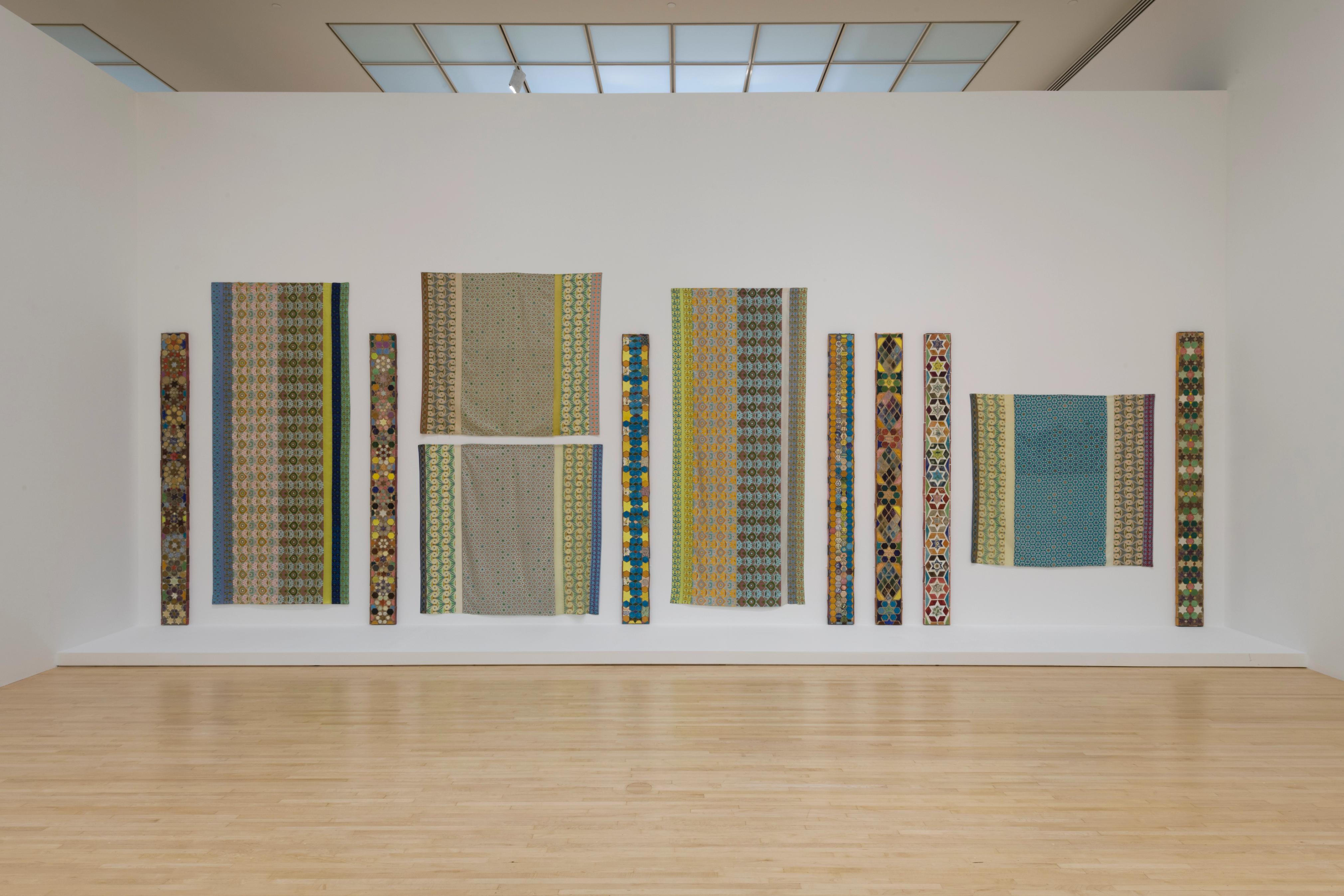
A pioneer of the Pattern and Decoration art movement of the 1970s, Joyce Kozloff created Pilaster in order to challenge a longstanding bias in the Western art tradition against decoration. For centuries, ornament, craft, and decoration were considered inferior to so-called high or fine art, and both non-Western aesthetic traditions as well as forms of art-making considered “women’s work” were denigrated. In defiance of these racist and sexist hierarchies, Kozloff created a pilaster (a column that is strictly decorative, having no architectural support function) using luster glazes and dazzling patterns drawn from Moroccan tiles, Viennese Art Nouveau books, American quilts, pre-Columbian pottery, and Islamic calligraphy, among other ornamental sources. She further utilized processes that were rooted in domestic activities: she rolled clay with a rolling pin, cut tiles with cookie cutters, and grouted with bathroom tile grout.