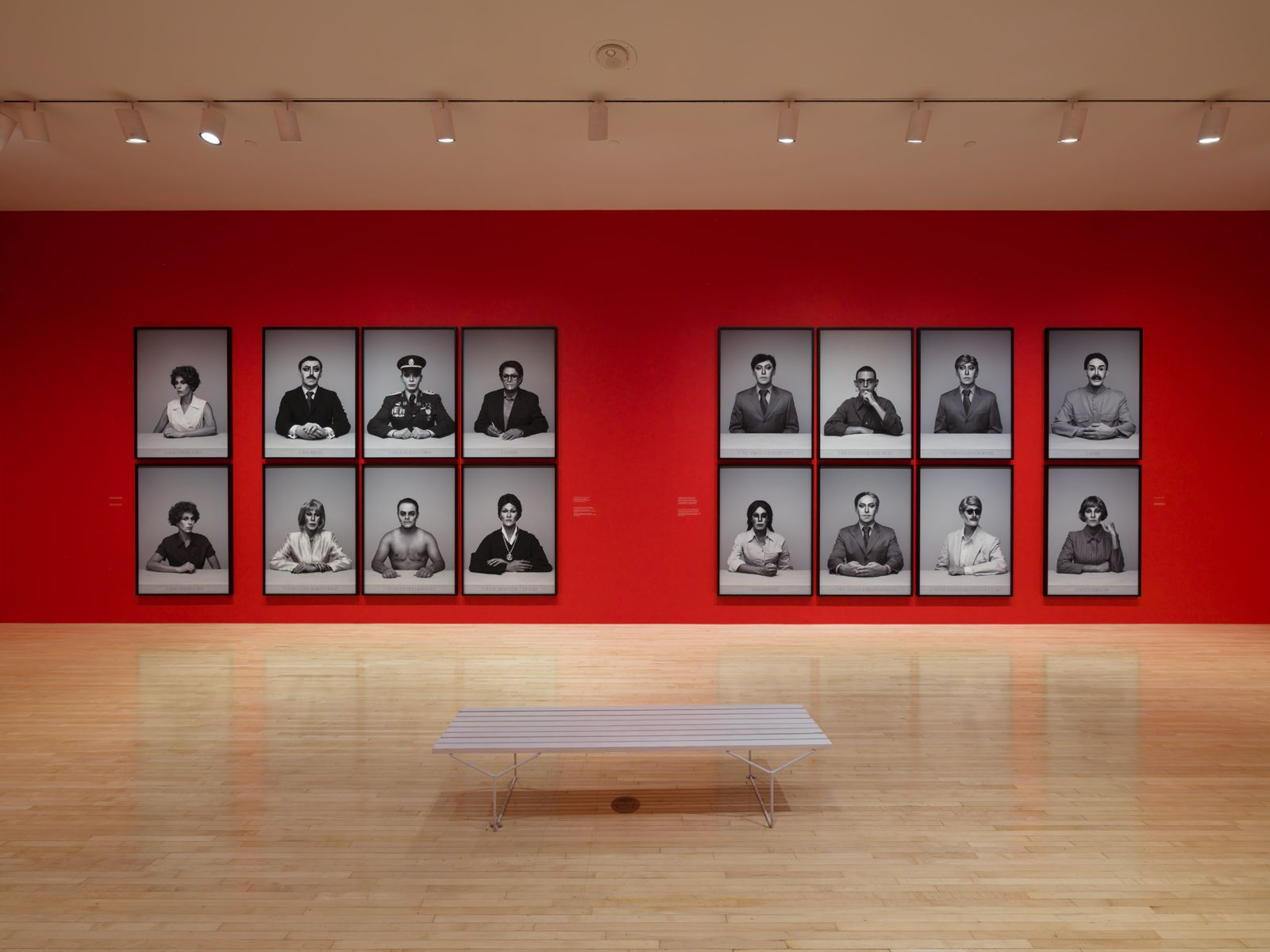
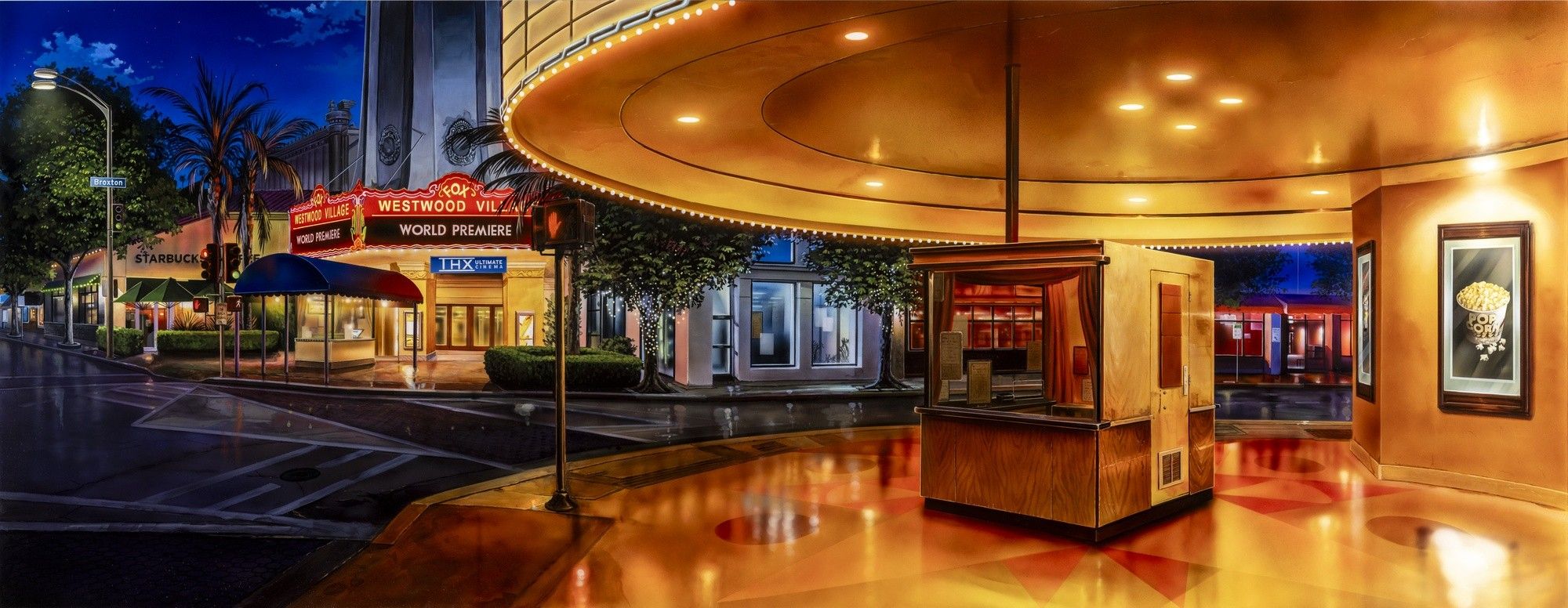
ALEXANDER APÓSTOL’S REGIME: DRAMATIS PERSONAE DEBUTS AT MOCA GRAND AVENUE THIS FALL
The exhibition features the Venezuelan artist’s black-and-white portraits examining the roles, gestures, and performances produced by authoritarian regimes.
Alexander Apóstol
Regime: Dramatis Personae
September 20, 2026 – January 3, 2027
MOCA Grand Avenue
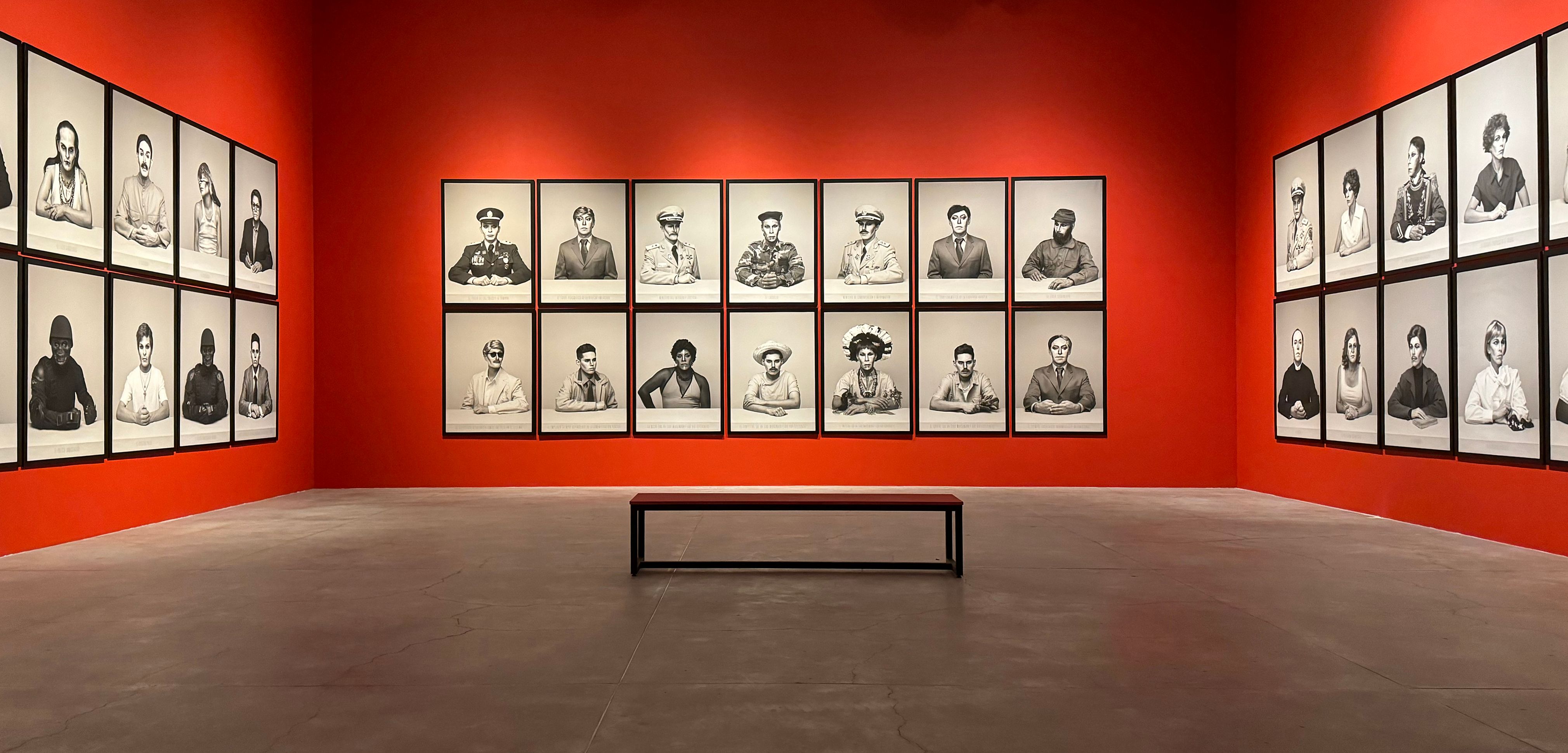
Installation view of Alexander Apóstol: Postura y geometría en la era de la autocracia tropical (Alexander Apóstol: Posture and geometry in the era of tropical autocracy), November 11, 2023–May 19, 2024 at Museo Universitario Arte Contemporáneo, Mexico City. Courtesy of the artist. Photo by Alexander Apóstol.
LOS ANGELES, CA—The Museum of Contemporary Art (MOCA) is pleased to present Regime: Dramatis Personae from September 20, 2026 through January 3, 2027 at MOCA Grand Avenue. Alexander Apóstol (b. 1969, Barquisimeto, Venezuela; lives in Madrid) explores the entanglement of art and systems of political power in Latin America and how the two mirror and distort each other. In his photographs, videos, and installations, Apóstol questions how national identities are constructed and mythologized. Regime: Dramatis Personae (2017), is a series of black-and-white portraits depicting archetypal figures appearing on the stage of populist and authoritarian governments.
Drawing on years of research into Venezuela’s political history, Apóstol analyzed the gestures, postures, and body language associated with characters operating within a political comedy of errors. This inquiry probes pivotal moments in Latin America’s history, from the roster of heroes who fought for independence from the Spanish crown in the nineteenth century and the promises of progress and modernism that defined most of the twentieth century, to the rise and fall of the Bolivarian Revolution that led to the current humanitarian and political crisis. The resulting portraits are not representations of specific individuals, but rather of the roles produced and performed under autocratic regimes. The photographs were taken in Caracas in 2017, during a period of intensified violent government repression. The artist collaborated with LGBTQ+ activists, who modeled figures of their choice from the artist’s proposed dramatis personae, a Latin phrase meaning “persons of the drama.”
“This series is as urgent today as when it was made almost ten years ago. We are thrilled to bring this body of work to Los Angeles for the first time. Apóstol is one of the most incisive and searching voices in contemporary Latin American art,” said José Luis Blondet, MOCA Senior Curator. “Regime: Dramatis Personae is, in a sense, a larger-than-life chess set or a maximalist official gallery of portraits, compelling us to confront the theatrics of political power and the roles, gestures, and performances that autocratic regimes produce and depend upon.”
Instead of a name, Apóstol inscribed each portrait with the social function embodied by the sitter. Although Apóstol was responding to preceding events, these portraits continue to resonate with the shifting political climate of his country, inaugurated by the United States’s intervention that began in January 2026. From the ninety photographs comprising the series, Apóstol often makes a selection specific to the country or city where they are displayed. For this presentation, he pointedly features portraits such as EL DICTADOR (THE DICTATOR), El POLICÍA ENMASCARADO (THE MASKED POLICE OFFICER), LA TURISTA IDEOLÓGICA (THE IDEOLOGICAL TOURIST), EL SIEMPRE SOSPECHOSO INTERMEDIARIO INTERNACIONAL (THE EVER-SUSPICIOUS INTERNATIONAL INTERMEDIARY), EL MILICIANO APOYADO (THE PROPPED-UP PARAMILITARIST), and EL DE HOLLYWOOD (THE ONE FROM HOLLYWOOD), among others.
Alexander Apóstol, Regime: Dramatis Personae is organized by José Luis Blondet, Senior Curator, with Emilia Nicholson-Fajardo, Curatorial Assistant, The Museum of Contemporary Art, Los Angeles.
Major support is provided by the MOCA Global Council.
This exhibition is made possible by generous endowment support from The Max Yavno Fund.
Exhibitions at MOCA are supported by the MOCA Fund for Exhibitions with lead funding provided by Jordan S. Goodman + The Goodman Family Foundation. Major funding is provided by Tatiana Botton, Kathi and Gary Cypres, and Alfred E. Mann Charities. Generous funding is provided by Michael and Zelene Fowler, The Earl and Shirley Greif Foundation, John Morace and Tom Kennedy, Daryl and Robert Offer, Jonathan Segal, and the Carl and Ruth Shapiro Family Foundation.
ABOUT ALEXANDER APÓSTOL
Encompassing photography and video, Alexander Apóstol’s practice has revealed the different codes of gender, race and identity that accompany the ideologies of Latin America, incorporating the colorful, optimistic imaginary of modernization as well as the catalog of corporeal, sexualized fantasies of the continent’s nationalisms and populisms. His work oscillates between Venezuela’s dichotomous traditional visuals: on the one hand, the historicist, nativist vision developed by realist painters—patronized by the Marcos Pérez Jiménez dictatorship—which has been prolonged by the tragicomic staging of the current Bolivarian regime, and on the other, constructivism’s utopia of energetic, corporeal reinvention during the oil boom, from 1960 to 1970.
Alexander Apóstol’s work has been subject to solo exhibitions, including at MAMBO, Bogotá (2024); MUAC, Mexico City (2023); Fundación Proa, Buenos Aires (2023); CA2M, Madrid (2022); MALBA, Buenos Aires (2017); Sala de Arte Público Siqueiros, Mexico City (2015); Centro de la Imagen, Lima (2011); MUSAC, León, Spain (2010); and Cisneros Fontanals Art Foundation, Miami (2006).
He has been invited to many collective international shows such as the Cuenca Biennial (2004, 2023); EVA International, Ireland (2018); the 12th Shanghai Biennial (2018); the 12th Gwangju Biennial (2018); BIENALSUR (2017); Les Rencontres d’Arles (2017); Manifesta 9, Genk (2013); the 16th Mercosul Biennial, Brazil (2010); the 54th Venice Biennale (2011); the Prague Biennial (2003, 2005); the 8th Istanbul Biennial (2003); Printemps de Septembre, Toulouse, France (2003); the São Paulo Biennial (2002); PhotoEspaña, Madrid (2003); FotoFest, Houston (2002); the Havana Biennial (1997).
He participated to numerous exhibitions in international institutions such as Les Abattoirs, Toulouse (2024); CAAC, Sevilla (2024); Institute for Contemporary Art, Virginia (2023); Musée du Quai Branly, Paris (2020); Sala Alcala 31, Madrid (2019); Guggenheim Museum, New York (2014); MUAC, Mexico City (2014); JUMEX Foundation, Mexico City (2011); MOCA, Toronto (2011); Museo Reina Sofía, Madrid (2007), and more. Apóstol’s works are part of important public and private collections, such as the Tate Modern, London; the Guggenheim Museum, New York; Centre Pompidou, Paris; Museo Reina Sofía, Madrid; Perez Art Museum, Miami; Cisneros Fontanals Art Foundation CIFO, Miami; Museo Banco de la República, Bogotá; Fundación ARCO, Madrid; MUSAC, León; Museo del Barrio, New York; and MNBA, Buenos Aires; among others.